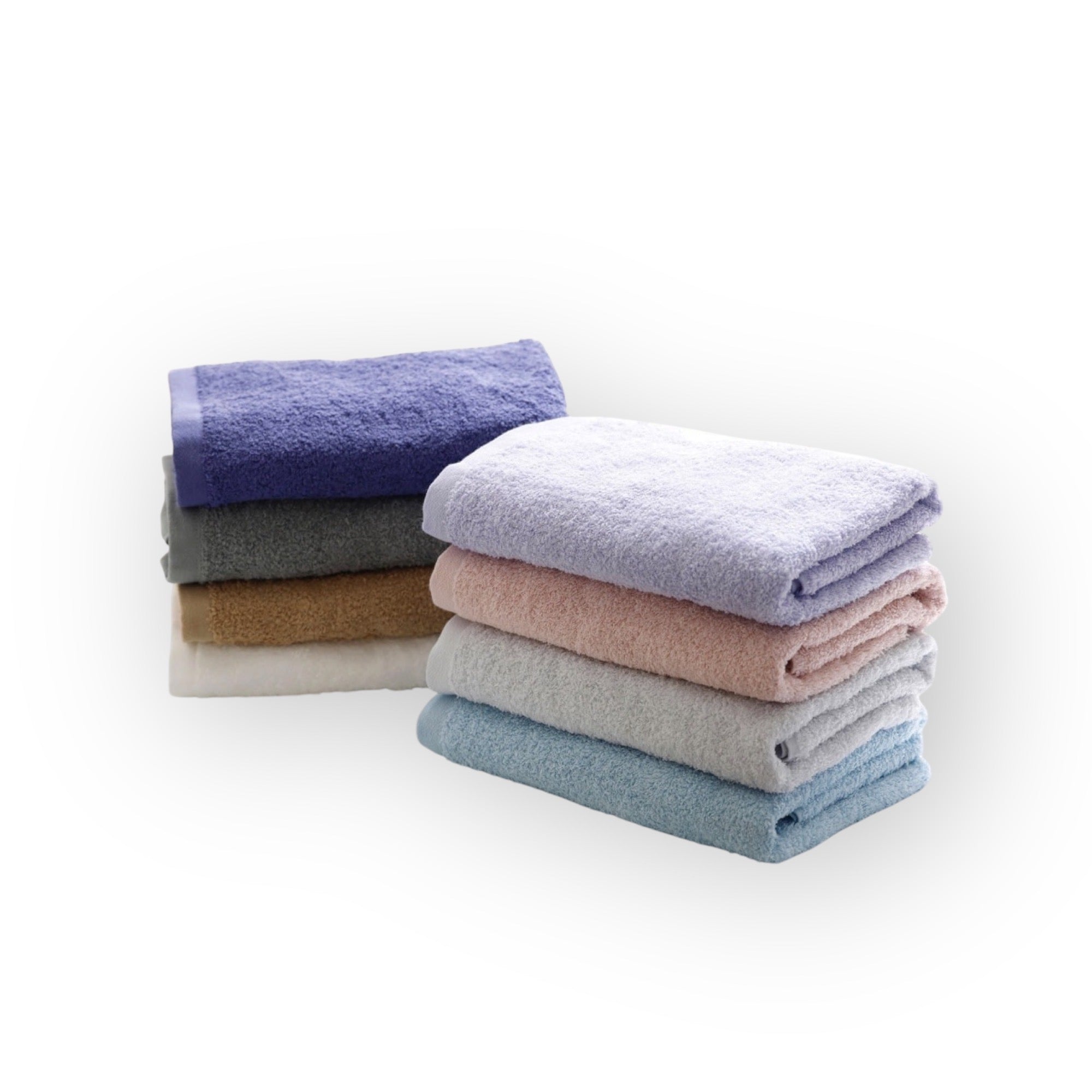
SENSHU TOWEL / SENSHU TOWELS
About 140 years ago / 1880s / Meiji Period (1868–1912)
Senshu towels developed after Enjiro Satoi began Japan’s first full-scale towel weaving in the Sano area of Osaka around 1887. The region became known for ato-zarashi, a process in which starch and impurities are washed out after weaving, giving the finished towel immediate absorbency and cleanliness.
In Japan, Senshu towels are valued less for extravagant decoration than for practical performance—especially the fact that they absorb water well from the first use. They are common in homes, hotels and gifts, with modern production also exploring organic cotton, lightweight drying and other lifestyle needs.
Many textiles wash or prepare yarn before weaving, but Senshu’s defining step comes afterward. Starch needed for weaving is removed only once the cloth is complete, so a brand-new towel already feels soft and thirsty. A final washing process determines the core performance of the product.