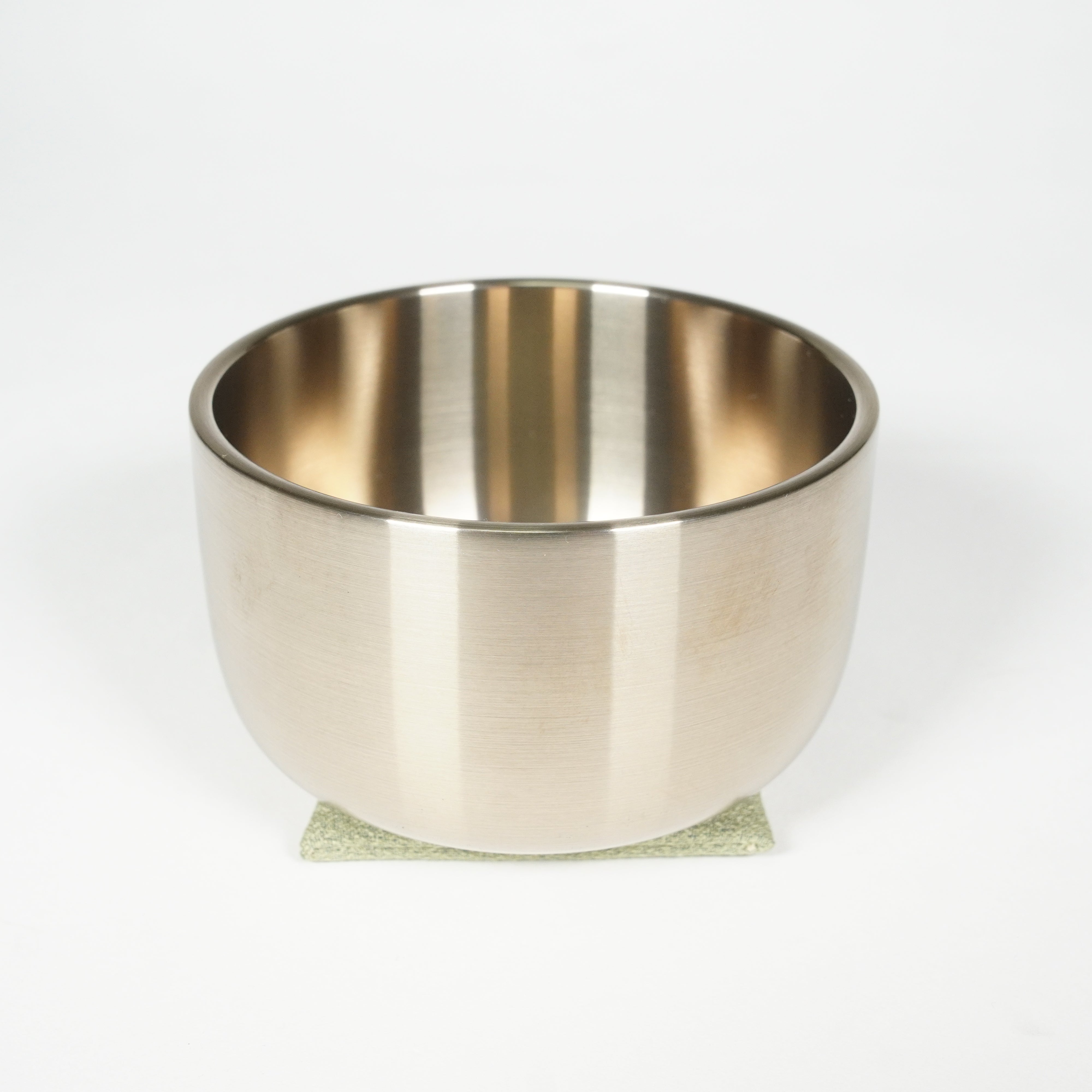
Singing Bowl / Hibiki / Besar
DESCRIPTION
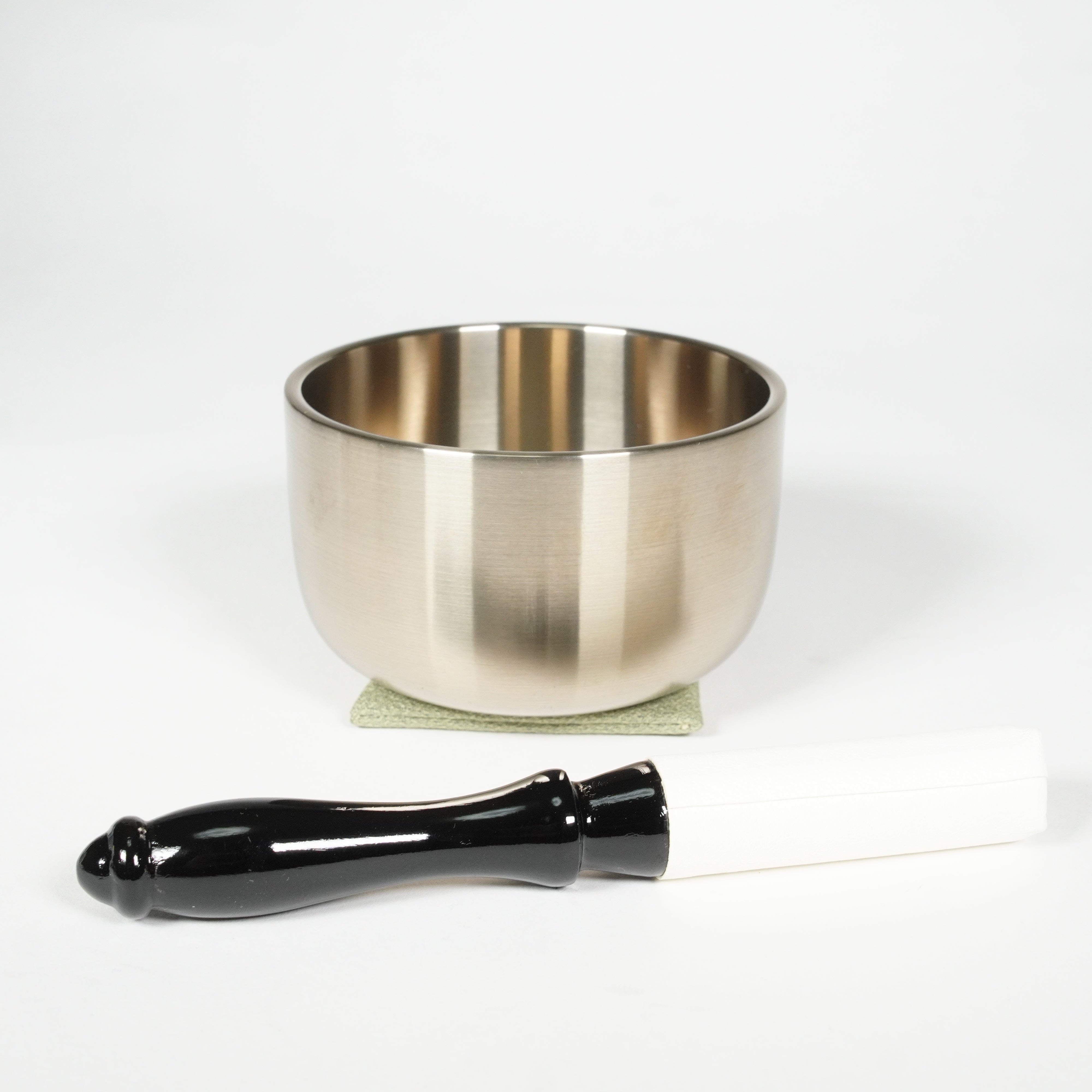
This traditional singing bowl is simple, sophisticated and beautiful. The surface is smooth and shiny and the basic design is extremely simple. Its sound is deep and clear and is said to have a calming effect on the mind and to enhance concentration during meditation.
Since its establishment of the workshop in 1843, the Singing bowl has been dedicated to sound to this day, the fifth generation, without changing materials or techniques. The material is a metal called Sahari, an alloy of copper and tin.
Futakataya's Singing bowls are metal sounding bowls made from the same material as Sahari, a Shosoin treasure that has existed for 1,300 years.
Only one singing bowl can be made from a single mould, and the entire process takes 180 different steps over a long period of time.
Singing bowls made by Futakataya are characterised by a sound that rises and falls with use over a period of five or ten years, and this sound is said to "cut off evil, purify the place and exorcise evil spirits.
*The sound is a delicate metal, so if dropped or subjected to a strong impact, it will crack and cease to ring.
*Wipe dry with a soft cloth. (Do not apply polish, cream, etc.).
*As they are all handmade, the sound of the same product may differ from each other. Please be aware of this beforehand.
DETAILS
SIZE
Width:9cmDepth:9cmHeight:6cmWeight : 360
MATERIAL
Copper
Tin
ARTISAN
FUTAKATAYA
The miracle of casual everyday life
The lingering sound of Futakataya's Japanese singing bowls, with their variously changing undulations, resonates as if it were calming the mind.
I want to gently accompany you as you rush through every minute of your life. Let the sound of the music give you time to heal your mind and change your mood...
ARTISAN STORY
Futakataya
Singing bowl workshop established in 1843. Futakataya's Japanese singing bowls are metal sounding bowls made from the same material as Sahari, a Shosoin treasure that has existed for 1,300 years.
Only one Japanese singing bowl can be made from a single mould, and the entire process takes 180 different steps over a long period of time.
The process begins with the selection of the clay, the condition of the metal, the mixture, the temperature of the mould out of the pot, the timing of casting, the season, the weather, the humidity and the temperature - if any of these factors are missed, the tone will not sound.
KOGEI
ORIN / JAPANESE SINGING BOWL
About 1,400 years ago / 600s / Asuka Period (592–710)
Japanese singing bowls trace their roots to metal ritual instruments that arrived in Japan with Buddhism. They became established in temples as signals for chanting and worship, later spreading to household Buddhist altars. Through refinements in casting, hammering and alloy composition, Japanese makers developed bowls prized for long, clear resonance.
For many Japanese people, the sound of a singing bowl marks more than a religious ritual: it creates a moment to remember the deceased and settle the mind. Today the bowls remain important Buddhist implements, while also being rediscovered for meditation, relaxation and contemporary interiors.
A fascinating point is that two bowls of almost identical appearance can sound completely different. Alloy composition, wall thickness, finishing, temperature and humidity can all affect resonance, and craftspeople ultimately tune the sound by ear. In that sense, this is not only a craft of shaping metal, but a craft of shaping sound.
Caution
Individual Differences
As each piece is individually handcrafted, slight variations in color, pattern, shape, and texture may occur. These subtle differences are a natural characteristic of handcrafted works, making each piece truly unique. We hope you will enjoy these individual variations as part of the beauty and character of Japanese craftsmanship.
Production Time
If an item is not currently in stock, it may be made to order by the artisan. As each piece is carefully handcrafted, production may take several months depending on the item and the artisan's schedule. We appreciate your patience and understanding.

选择选项