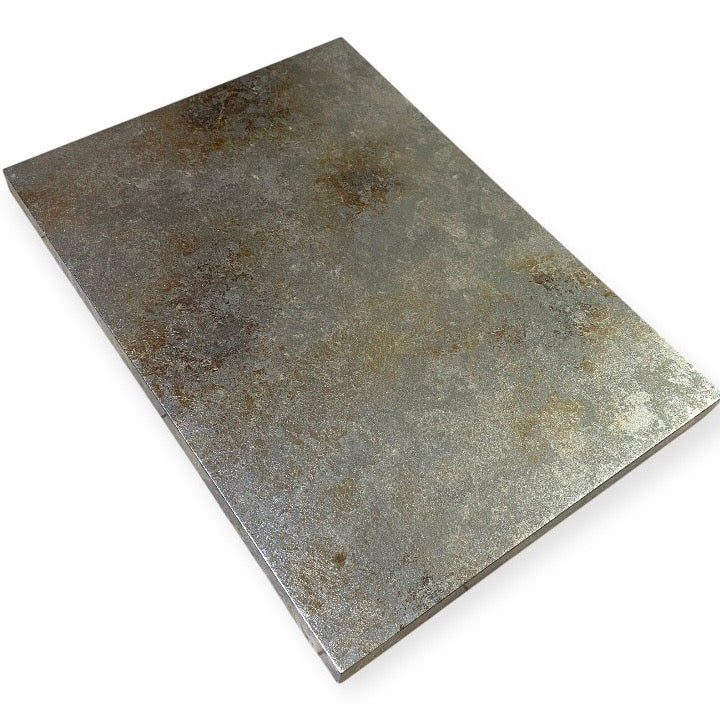
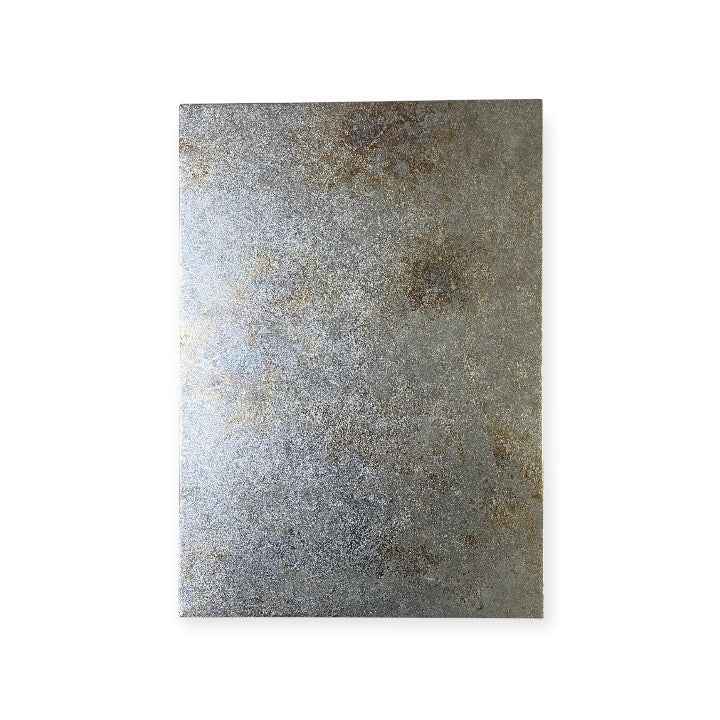
Hikibaku Art Panel / Midnight Sun
DESCRIPTION
DETAILS
SIZE
MATERIAL
ARTISAN
KOGEI
Caution
Choose options


Hikibaku Art Panel / Midnight Sun
Sale price€377,95
Country
Language
Cart
Your cart is empty


This art panel makes use of hikibaku, a traditional technique that has supported Nishijin textiles for a long time.
The wabi and sabi of Japan is expressed by utilizing the property of silver to change color through sulfurization.
SIZE
Width:25.7cm
Height:36.5cm
Depth:1.5cm
Weight:264g
MATERIAL
Silver leaf
NISHIMURA SHOUTEN
"Expanding the technique of hikibaku into various fields"
Thanks to the ingenuity and creativity of our predecessors, hikibaku has evolved into a technique with a rich variety of expressions.
We believe it is a material and method that can be applied not only to traditional Japanese attire, but also across a wide range of genres.
While continuing to share the unique beauty that only hikibaku can convey,we are also committed to nurturing the next generation of artisans involved in traditional industries.
ARTISAN STORY
Nishimura Shouten
Founded in 1924, the company began as a shop specializing in gold and silver threads as well as hikibaku (decorative foil).
In the 1960s, amid a surge in demand, the business shifted from general gold thread production to focus exclusively on hikibaku, growing into a large workshop with around 20 skilled artisans.
It was also during this period that the variety of hikibaku expanded—not only producing kin-muji-haku (solid gold foil sheets), but also developing new styles tailored to customer needs.
Today, we continue to explore the creative potential of hikibaku, crafting once-in-a-lifetime designs through a combination of diverse techniques and refined artistic sensibility.
KYO WARE & KIYOMIZU WARE
About 1,200 years ago / 800s / Heian Period (794–1185)
Kyoto ceramics reach back to kilns operating before and during the Heian period, then expanded with tea culture in the Muromachi and Momoyama eras. In the seventeenth century, Nonomura Ninsei perfected brilliant overglaze decoration, followed by innovators such as Ogata Kenzan, Okuda Eisen and Aoki Mokubei, whose diverse approaches shaped today’s Kyo and Kiyomizu ware.
In Japan, these ceramics are famous precisely because there is no single fixed style. Tea bowls, kaiseki dishes and everyday tableware may use overglaze painting, blue-and-white decoration, gold, sancai-inspired color and many other techniques. The craft sits at the heart of Kyoto’s culture of pairing vessels with cuisine and tea.
The surprising point is that Kyoto was never defined by a single major clay deposit. Potters drew on materials such as Amakusa porcelain stone, techniques arriving from other regions, and the tastes of artists and patrons gathered in the capital. Freedom from one local material helped make Kyoto ceramics unusually hybrid and stylistically diverse.
Individual Differences
As each piece is individually handcrafted, slight variations in color, pattern, shape, and texture may occur. These subtle differences are a natural characteristic of handcrafted works, making each piece truly unique. We hope you will enjoy these individual variations as part of the beauty and character of Japanese craftsmanship.
Production Time
If an item is not currently in stock, it may be made to order by the artisan. As each piece is carefully handcrafted, production may take several months depending on the item and the artisan's schedule. We appreciate your patience and understanding.

Choose options