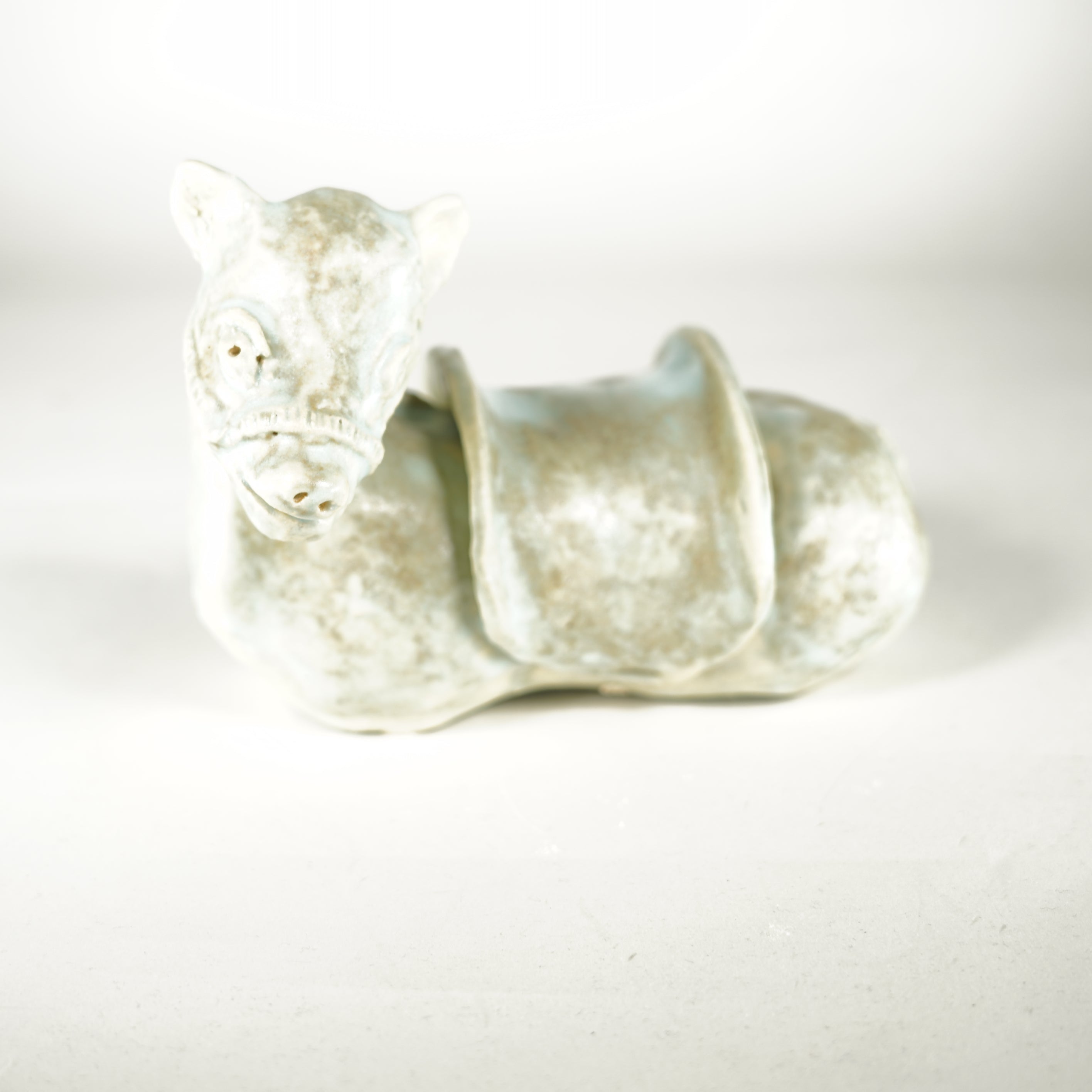


Ceramic Horse Figurine 2
DESCRIPTION
DETAILS
SIZE
MATERIAL
ARTISAN
KOGEI
Caution
Ceramic Horse Figurine 2
Sale price€163,95
Choose options
Ceramic Horse Figurine 2
Sale price€163,95
Country
Language
Cart
Your cart is empty
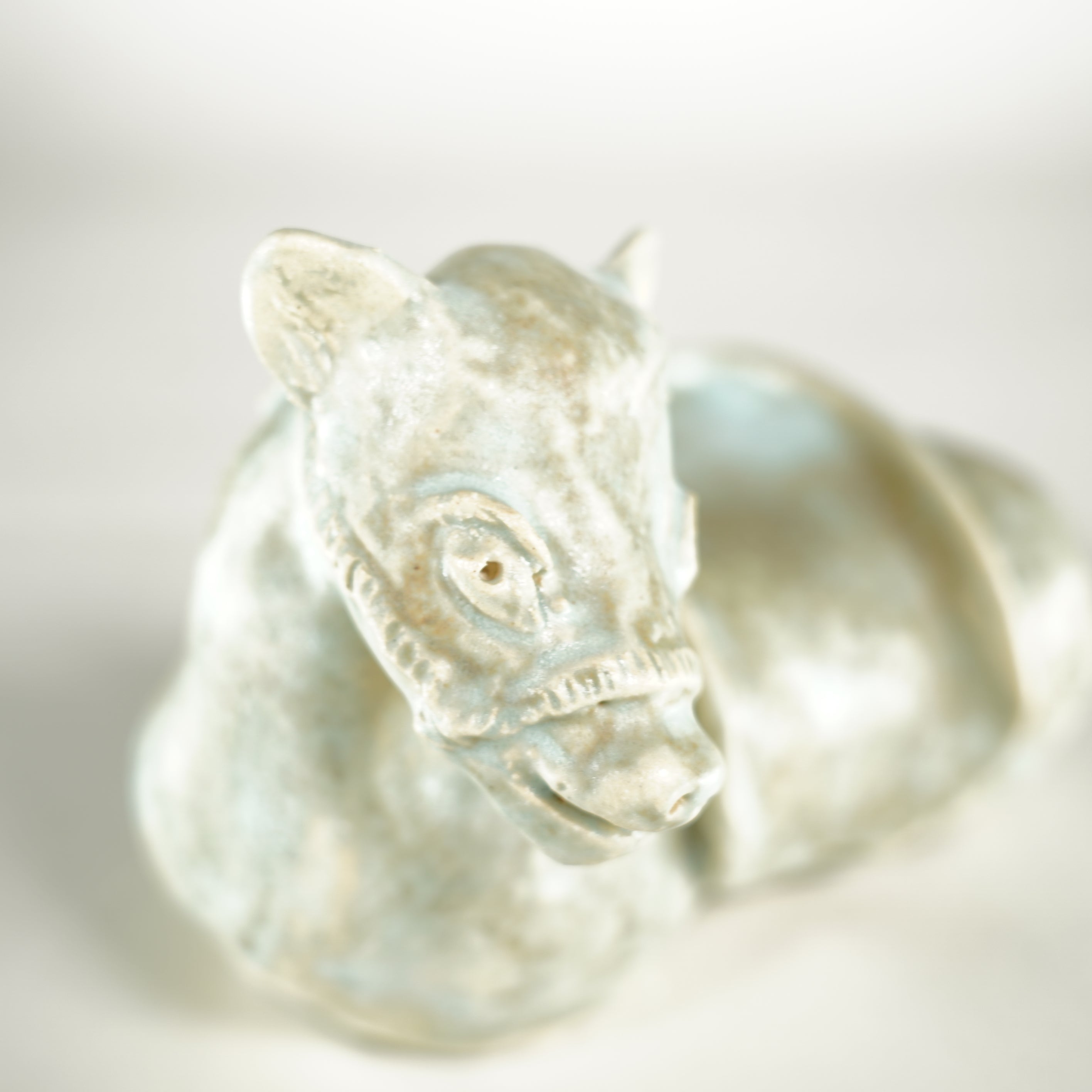
This horse figurine is modeled after the scene from the Noh play "Shakkyo" (Stone Bridge). The horse's saddle is glazed in a mix of rust and blue colors, representing the stone bridge on which the monk Jakushō encounters a miraculous sight during his journey in the play. I hope you can enjoy the world of the story by placing it on your bookshelf or display shelf.
SIZE
Width : 17cm
Height : 12.5cm
Depth : 9cm
Weight : 1,100g
MATERIAL
Ceramic
SHUKO KAWAHARA
"Fusing Tradition and Creativity"
Based on traditional Kiyomizu-ware techniques, I am exploring entirely new shapes and concepts of imaginary animals, aiming to provide viewers with fresh surprises and joy. These ceramic creatures offer moments of delight in daily life, captivating hearts with their delicacy and creativity.
ARTISAN STORY
Shuko Kawahara
Shuko Kawahara is a ceramic artist based in Kyoto. She creates artworks centered around imaginary animals, utilizing traditional glazes. These pieces are small enough to fit in the palm of your hand, shaped like droplets or water pitchers, and possess a unique charm that soothes the viewer's heart. Ms. Kawahara aims to bring moments of joy into everyday life with these tiny beings, carefully crafting each piece to achieve this goal.
KIYOMIZU WARE
About 400 years ago / 1600s / Edo Period (1603–1868)
Kiyomizu ware takes its name from ceramics historically produced around Kiyomizu-dera and Kyoto’s eastern hills. It grew during the Edo period with tea culture and temple pilgrimage, absorbing the brilliant decoration associated with Ninsei and Kenzan as well as porcelain, blue-and-white and many other techniques.
In Japan, the name suggests refined Kyoto tableware, ranging from formal tea and kaiseki vessels to everyday dishes. Even after many kilns moved to districts such as Yamashina, the tradition retained an unusual stylistic diversity: each workshop may look completely different from the next.
Despite the name, many contemporary Kiyomizu workshops are no longer located near Kiyomizu-dera. Urban development and environmental concerns led to relocation, while the old place-name remained as a brand remembering the craft’s origin. Geography moved, but the name stayed.
Individual Differences
As each piece is individually handcrafted, slight variations in color, pattern, shape, and texture may occur. These subtle differences are a natural characteristic of handcrafted works, making each piece truly unique. We hope you will enjoy these individual variations as part of the beauty and character of Japanese craftsmanship.
Production Time
If an item is not currently in stock, it may be made to order by the artisan. As each piece is carefully handcrafted, production may take several months depending on the item and the artisan's schedule. We appreciate your patience and understanding.
Choose options