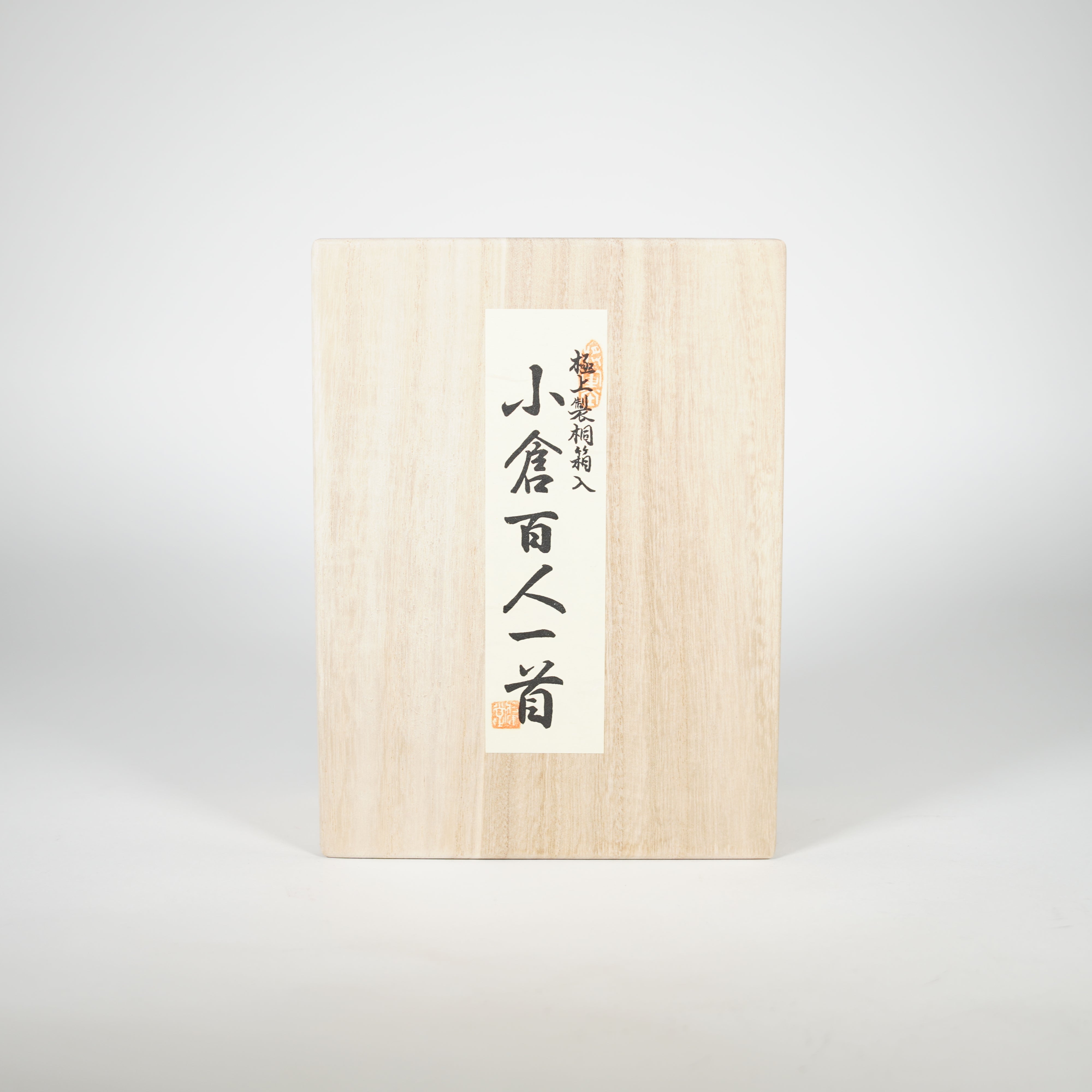
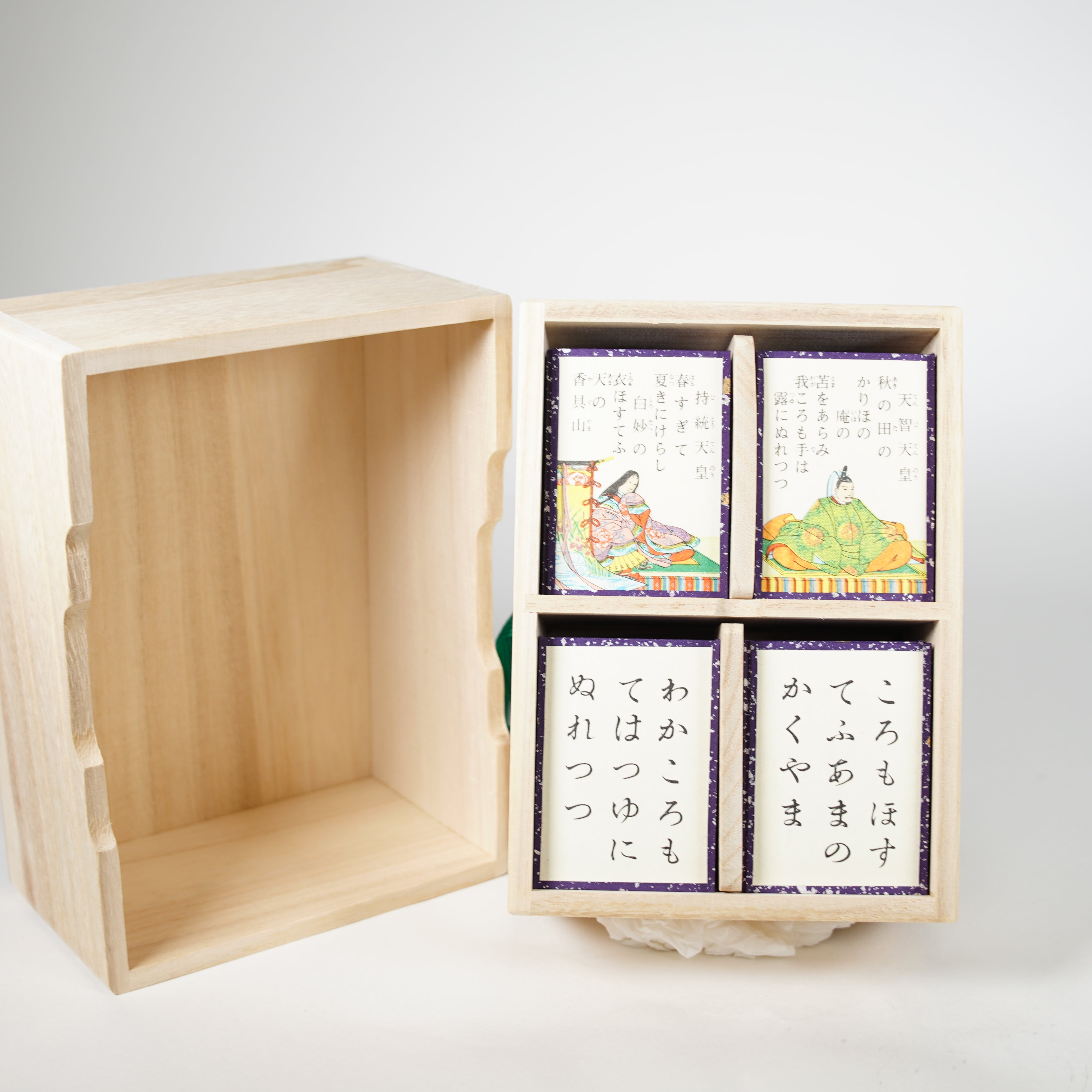
KARUTA / JAPANESE PLAYING CARDS
About 450 years ago / 1500s / Azuchi–Momoyama Period (1573–1603)
Karuta developed after Portuguese playing cards reached Japan in the sixteenth century and encountered older Japanese matching and poetry games. During the Edo period, distinctively Japanese forms such as Hyakunin Isshu and iroha karuta became established, while competitive karuta was later organized as a modern sport.
In Japan, karuta is familiar as a New Year family game and an educational tool for children. Hyakunin Isshu also serves as an accessible doorway into classical waka poetry. Competitive karuta remains vibrant today, with school clubs and national tournaments attracting players regardless of age or gender.
The name itself is a clue to its international history: “karuta” derives from the Portuguese word carta. A European card game was transformed in Japan into a world of poetry, literacy and lightning-fast athletic competition—an unusually vivid example of foreign culture being completely reimagined.