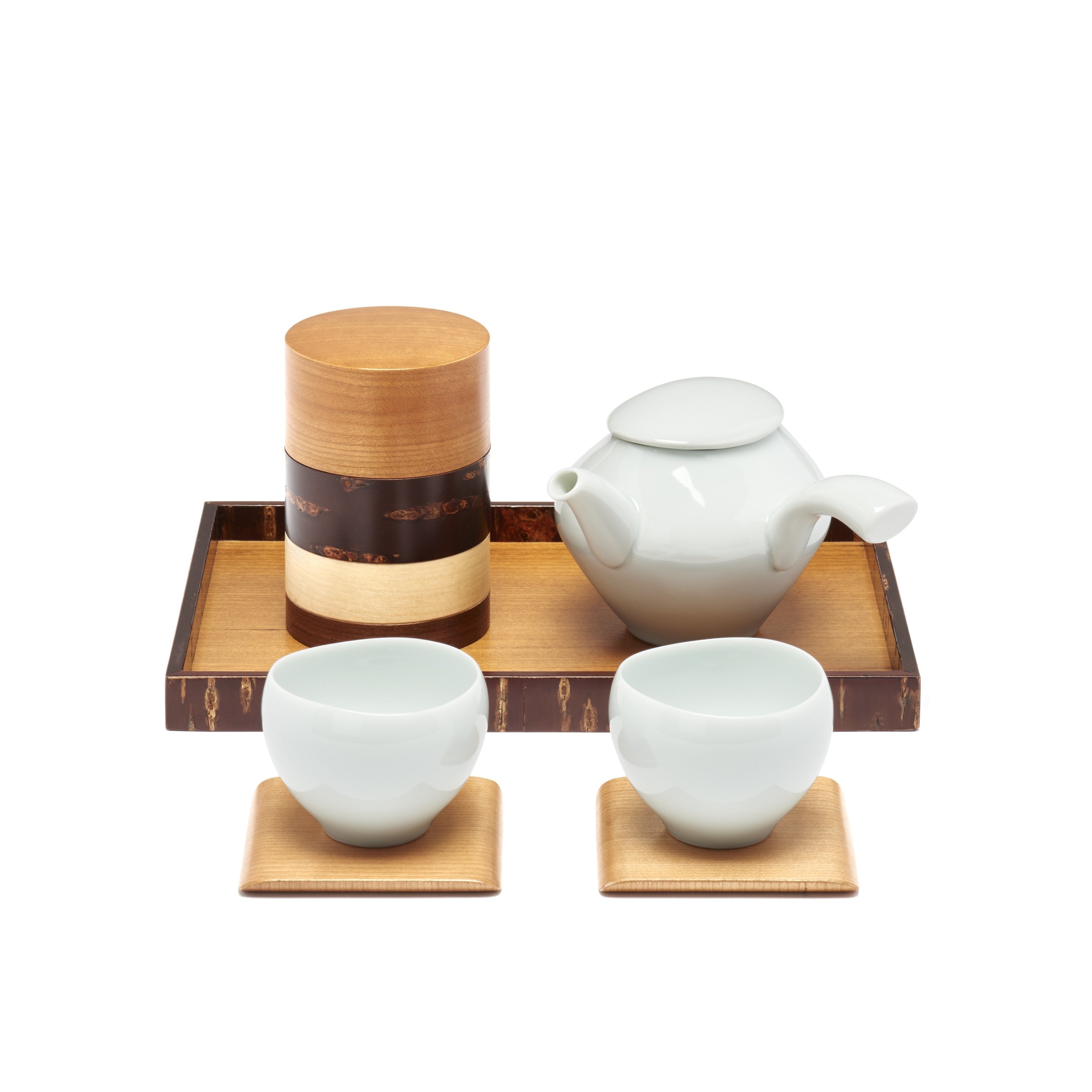
Four Seasons / Cherry Blossoms - Conjunto de presentes
DESCRIPTION
DETAILS
SIZE
MATERIAL
ARTISAN
KOGEI
Caution
Four Seasons / Cherry Blossoms - Conjunto de presentes
促销价格¥2,392.00
选择选项
国家/地区
语言
购物车
您的购物车为空
Gift set to be sent to your loved ones!
1. Cherry blossom Wazutsu (4 colors ) / 2. Cherry blossom sobita coaster 2 pieces / 3. Cherry blossom long-handled tray / 4. Teapot and teacup 2 pieces
*Teapot and teacup are sold as a gift set only. Why don't you cherish your own time to relax as a gift to your loved ones?
SIZE
Fancy boxWidth:39cmDepth:27.7cmHeight:12.8cmWeight:2,000g
MATERIAL
Cherry bark
FUJIKI DENSHIRO
"Tradition and Innovation"
I believe that the careful craftsmanship of products will lead to trust. I hope to pass this spirit of innovation on to the next generation while preserving our 200 year old traditions.
ARTISAN STORY
Fujiki Denshiro
We are a company that has been making Kaba-zaiku (wild cherry bark work) in Akita Prefecture for seven generations since 1851. The bark of the cherry tree, one of Japan's most popular tree/flowers, is used to make products that are delivered all over the world. Fujiki Denshiro's products are really beautiful and give a natural presense at any home or any table anywhere in the world!
ACHIEVEMENTS
・Received the Silver Medal at the San Francisco World's Fair
・Received Good Design Award
・Received Asia Design Award
KABA ZAIKU / AKITA CHERRY BARK CRAFT
About 240 years ago / 1780s / Edo Period (1603–1868)
Kaba-zaiku developed in Kakunodate in the late eighteenth century after techniques for working wild cherry bark arrived from the Ani region. Samurai households adopted the craft as supplementary work, producing tobacco containers and inro; during the modern era, production expanded to tea caddies, document boxes and other household objects.
In Japan, wild cherry bark is admired for its natural surface and the deeper gloss it develops through use. Tea caddies are especially prized because the fitted construction protects leaves from humidity, making the craft remarkably compatible with modern kitchens as well as traditional tea culture.
Despite the name kaba, the material is not white birch but the bark of wild cherry trees. The bark can be harvested without cutting down the tree and regenerates when collected properly, allowing the same woodland resource to be used over long periods. The craft therefore embodies an unexpectedly sustainable relationship with the forest.
Individual Differences
As each piece is individually handcrafted, slight variations in color, pattern, shape, and texture may occur. These subtle differences are a natural characteristic of handcrafted works, making each piece truly unique. We hope you will enjoy these individual variations as part of the beauty and character of Japanese craftsmanship.
Production Time
If an item is not currently in stock, it may be made to order by the artisan. As each piece is carefully handcrafted, production may take several months depending on the item and the artisan's schedule. We appreciate your patience and understanding.
选择选项