Pouca de bambu
DESCRIPTION
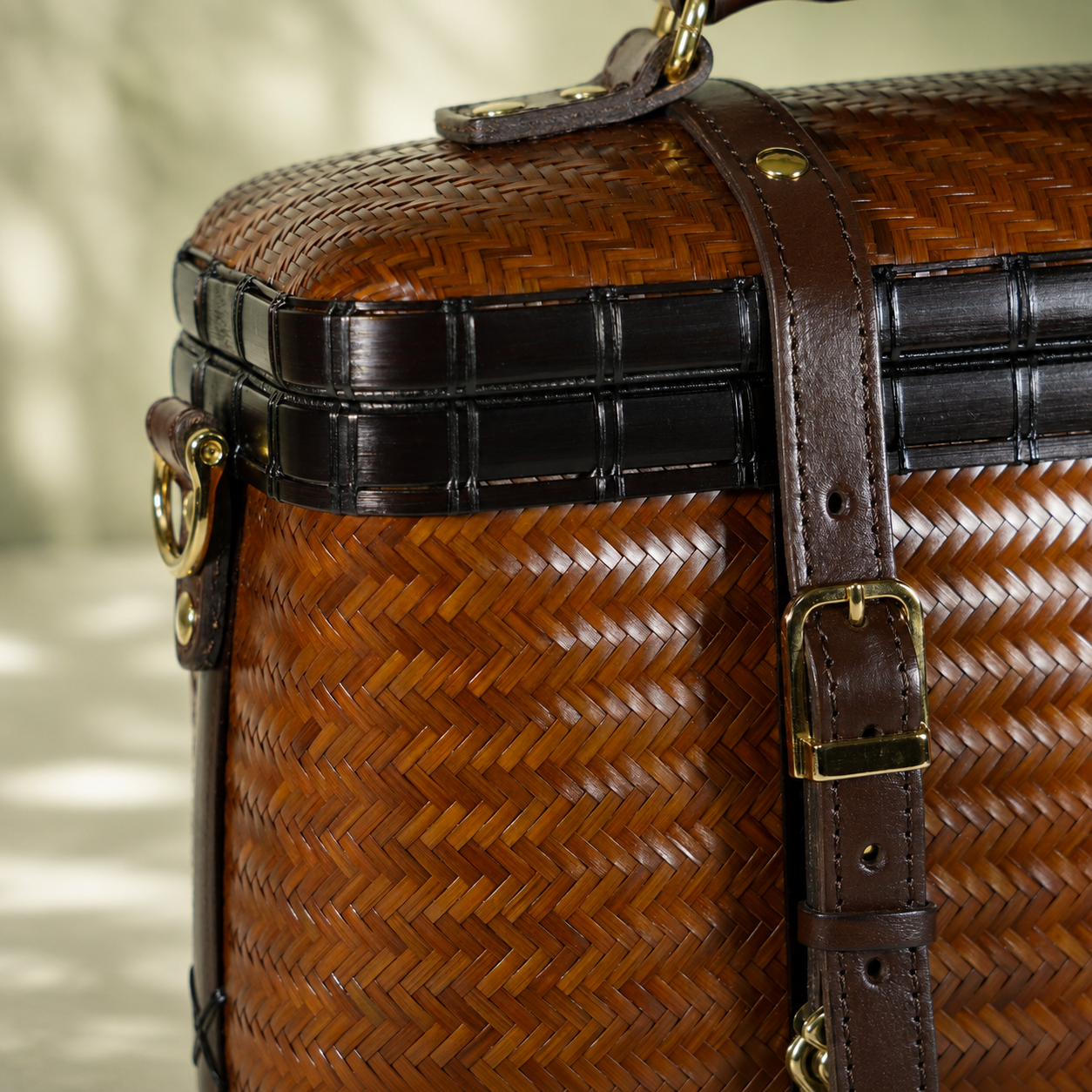
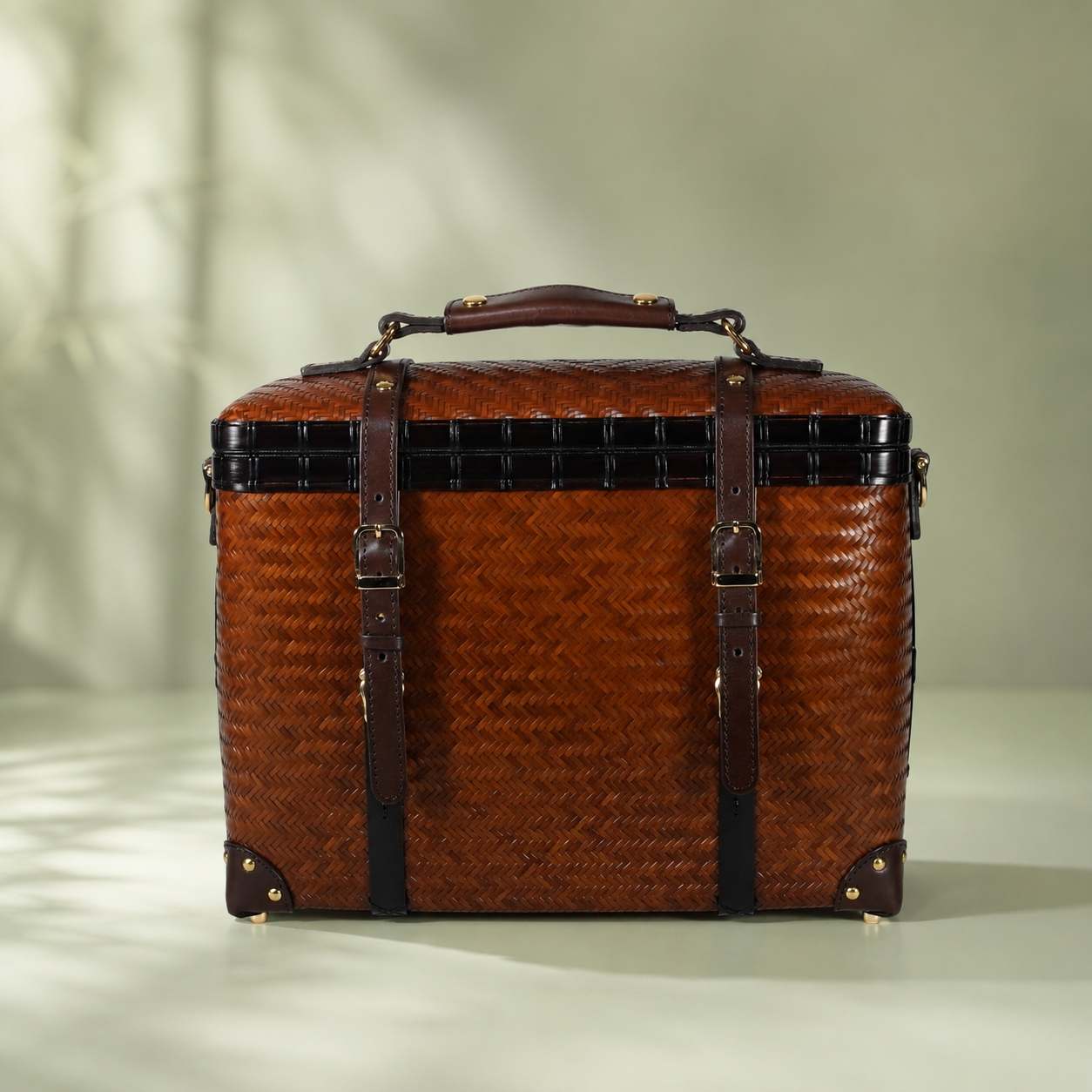
This briefcase is made from a single piece of bamboo.
An A4-size envelope can in it. It is made of thinly split bamboo, approximately 3mm wide and 0.2mm thick, carefully woven together. *Please watch the video below for more details.
Unlike ordinary bamboo basket bags, the bag has a lid, and the inside (lining) of the bag is lined with fabric and has pockets. In addition, cowhide is used for the handles and corner pads, and the collaboration of bamboo and cowhide can be enjoyed in this product. Although this bag was produced with business scenes, it can also be used as a hand-held bag or a shoulder bag. How about trying a sustainable bag for your daily life?
DETAILS
SIZE
Width:36cm
Depth:13cm
Height:29cm
Weight:1,000g
MATERIAL
Bamboo
Leather
ARTISAN
BAMBOO STUDIO KISETSU
"The position of a craftsman is difficult, but it is also interesting."
I believe that the "craftsman" is the person in between the "manufacturer" who mass-produces at a low cost and the "artist" who creates one-of-a-kind pieces at a nominal price. Craftsman must continue to produce products that can be used in daily life, that are neither too expensive nor too expensive, while preserving traditional techniques. It is certainly difficult to find the right balance between the two, but I find this job rewarding and above all, enjoyable.
ARTISAN STORY
Bamboo Studio Kisetsu / Hideaki Hosokawa
Hideaki Hosokawa is a Kyoto-based bamboo craftsman who quit his job at the age of 30 and has been studying bamboo crafts for 20 years. Bamboo crafts have been used in the tea ceremony and flower arrangement, but he also produce briefcases, handbags, and other bags for daily use that can be used for modern life.
He has a pasion to create products that people would want to hold in their hands and that are suitable for both men and women of all ages.
ACHIEVEMENTS
・Qualified as a first-class bamboo craftsman
・Awarded the Mayor of Kyoto Prize at the 51st Kyoto Bamboo Craft Exhibition
・Exhibited at "International Cultural Heritage Exhibition", Louvre Museum, Upside Down Pyramid Arcade
KOGEI
KYO TAKE KOGEI / KYOTO BAMBOO CRAFT
About 1,200 years ago / 800s / Heian Period (794–1185)
Kyoto bamboo craft developed through baskets, flower containers, tea scoops, partitions and other objects used by the court, temples and tea culture. Good bamboo grew around the old capital, and from the Muromachi period makers learned to value both perfect weaving and the expressive irregularities of natural nodes and bends.
In Japan, bamboo is familiar because it is light, strong and fast-growing. Kyoto bamboo craft ranges from formal tea utensils to daily objects, while contemporary makers now create bags, lighting, furniture and sculptural works.
Unlike wood, bamboo can be split repeatedly into extremely fine strips. A single round culm can become dozens or hundreds of flexible lines that are woven into curved surfaces and complex volumes. The material is transformed from a plant into a kind of “architecture made of lines” with remarkably little waste.
Caution
Individual Differences
As each piece is individually handcrafted, slight variations in color, pattern, shape, and texture may occur. These subtle differences are a natural characteristic of handcrafted works, making each piece truly unique. We hope you will enjoy these individual variations as part of the beauty and character of Japanese craftsmanship.
Production Time
If an item is not currently in stock, it may be made to order by the artisan. As each piece is carefully handcrafted, production may take several months depending on the item and the artisan's schedule. We appreciate your patience and understanding.

选择选项