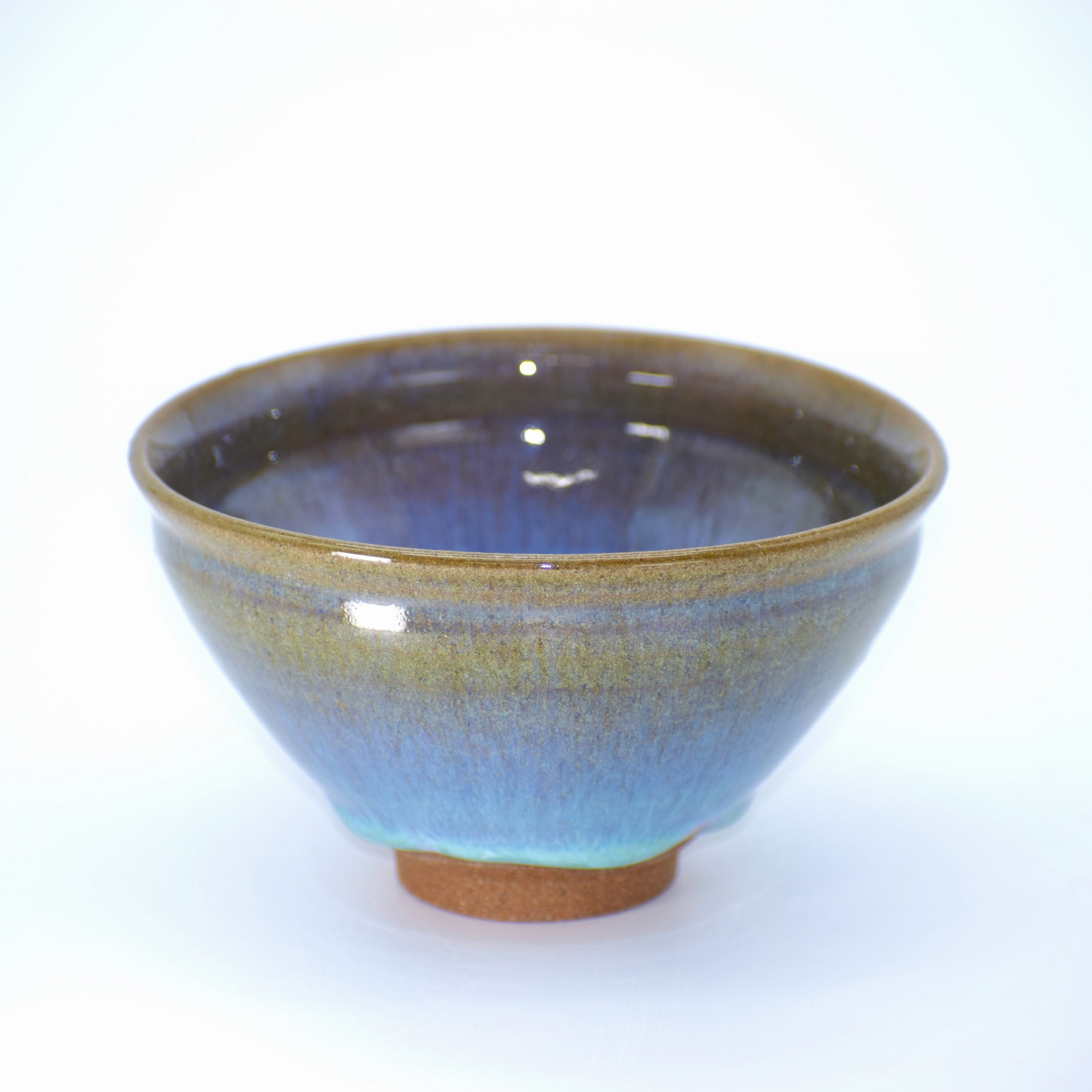
TENMOKU TEACUP / Lua Azul
DESCRIPTION
DETAILS
SIZE
MATERIAL
ARTISAN
KOGEI
Caution
TENMOKU TEACUP / Lua Azul
促销价格¥7,890.00
选择选项
TENMOKU TEACUP / Lua Azul
促销价格¥7,890.00
国家/地区
语言
购物车
您的购物车为空
The gradation of yellowish tints on the bright turquoise blue base is created by the Munakata Kiln craftsmen's intuition based on their experience.
It will make your room more gorgeous if you display it as a daily-use bowl or as a decoration for your interior. Why don't you pick one up and feel the traditional beauty of Japan?
SIZE
Width:12.2cm
Depth:1.8cm
Height:7cm
Weight:215g
MATERIAL
Clay
MUNAKATAGAMA
"It is important to draw out the potential power of the soil"
Since ancient times, the Japanese have cherished a culture of appreciating things through the five senses. We will continue to focus on pottery making to embody this spirit.
ARTISAN STORY
Toshihiro Munakata & Toshinori Munakata / Munakatagama
Aizu Hongo Pottery has been made in Fukushima Prefecture for nine generations by a father and his son. The ancestors of Munakatagama were missionaries of Munakata Taisha Shrine in Fukuoka Prefecture and established Munakata Shrine in Aizu. He began to make pottery while serving as a priest, and feeling that he had a talent for pottery, he resigned from the priesthood and began to devote himself to the pottery business. This was the beginning of the Munakatagama. The most distinctive feature of Munakatagama is its works with fuzzy colors created by using unique glazes. Both father and son have made inroads into Paris, New York, and other countries.
ACHIEVEMENTS
・Received the 36th Pola Prizes for Traditional Culture and Regional Awards
・Received the Tohoku Bureau of Economy, Trade and Industry Director-General's Award
・They have received many other awards for their work.
AIZU HONGO WARE
About 430 years ago / 1590s / Azuchi–Momoyama Period
Aizu Hongo ware began with roof tiles and utilitarian pottery produced under Gamo Ujisato in the late sixteenth century. In the seventeenth century, the Aizu domain under Hoshina Masayuki also encouraged porcelain. The district consequently developed into an unusual production center where both pottery and porcelain traditions coexist.
In Japan, Aizu Hongo is strongly associated with practical vessels—tableware, sake ware and storage jars—rather than only luxury ceramics. Today each kiln has its own clay, glazes and visual language, so the region combines the identity of a historic production center with the individuality of studio pottery.
Its most distinctive feature is precisely that dual heritage. Visitors can compare the warmth and texture of earthen pottery with the crisp whiteness of porcelain within the same village. Few ceramic regions offer such a clear, side-by-side lesson in the difference between the two materials.
Individual Differences
As each piece is individually handcrafted, slight variations in color, pattern, shape, and texture may occur. These subtle differences are a natural characteristic of handcrafted works, making each piece truly unique. We hope you will enjoy these individual variations as part of the beauty and character of Japanese craftsmanship.
Production Time
If an item is not currently in stock, it may be made to order by the artisan. As each piece is carefully handcrafted, production may take several months depending on the item and the artisan's schedule. We appreciate your patience and understanding.
选择选项