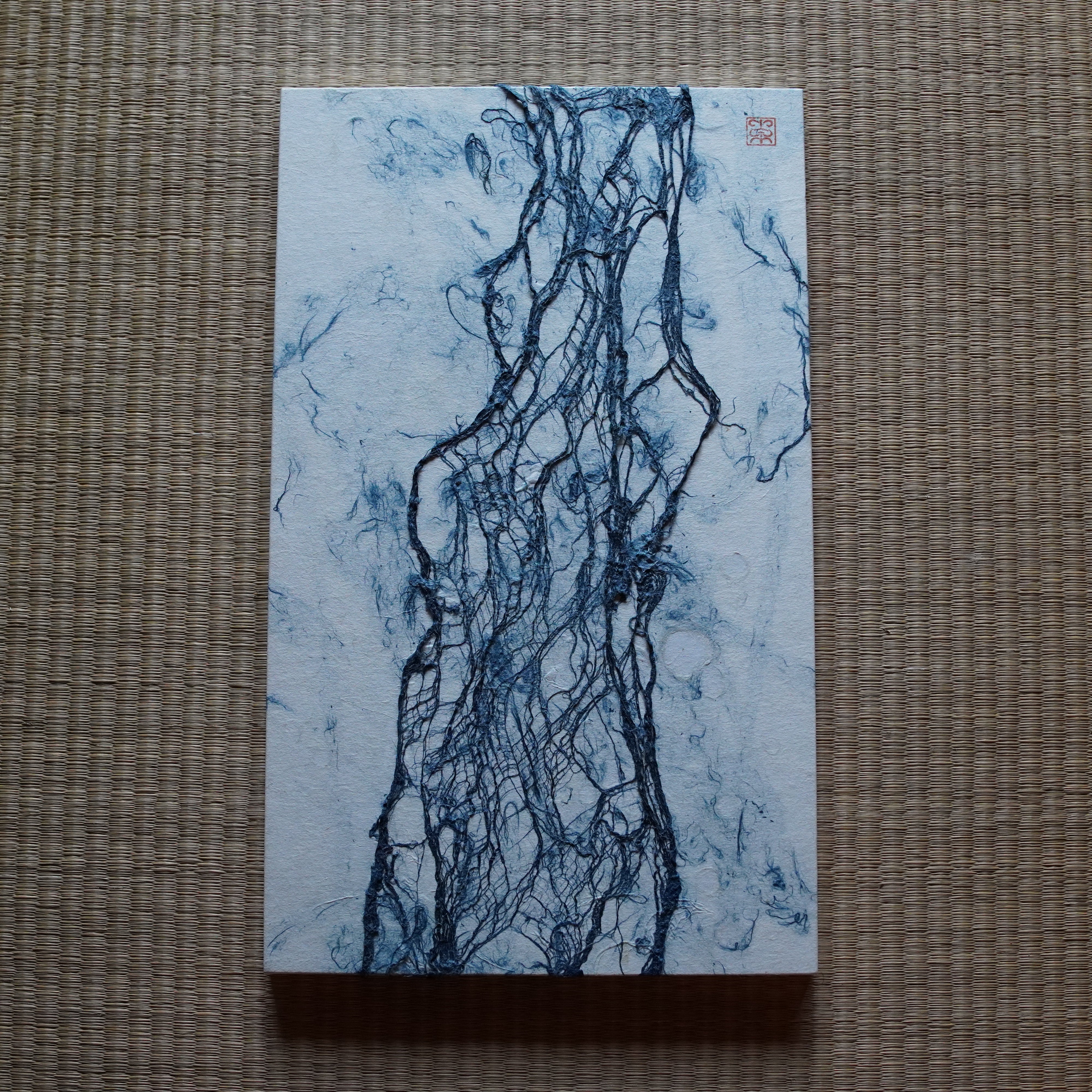
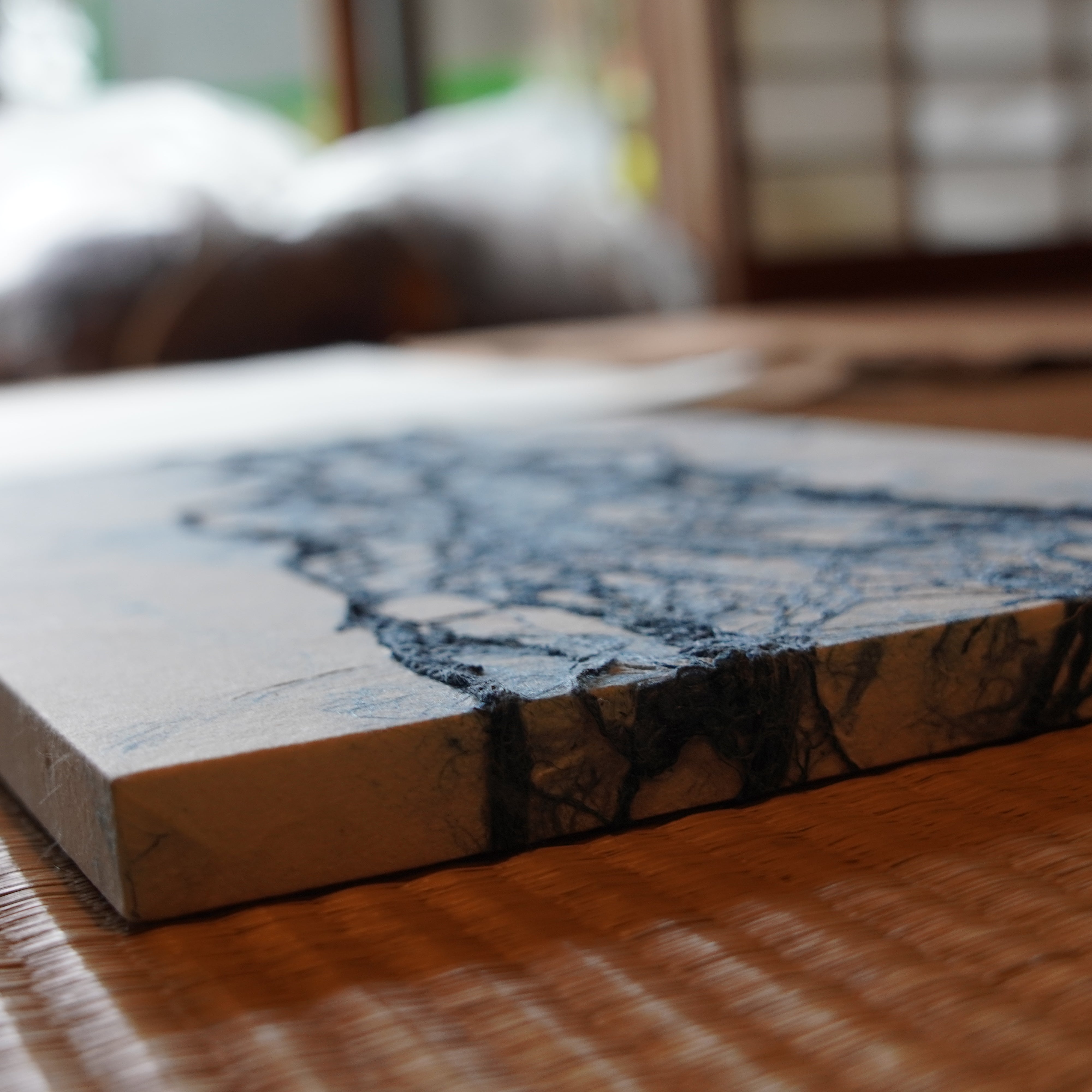
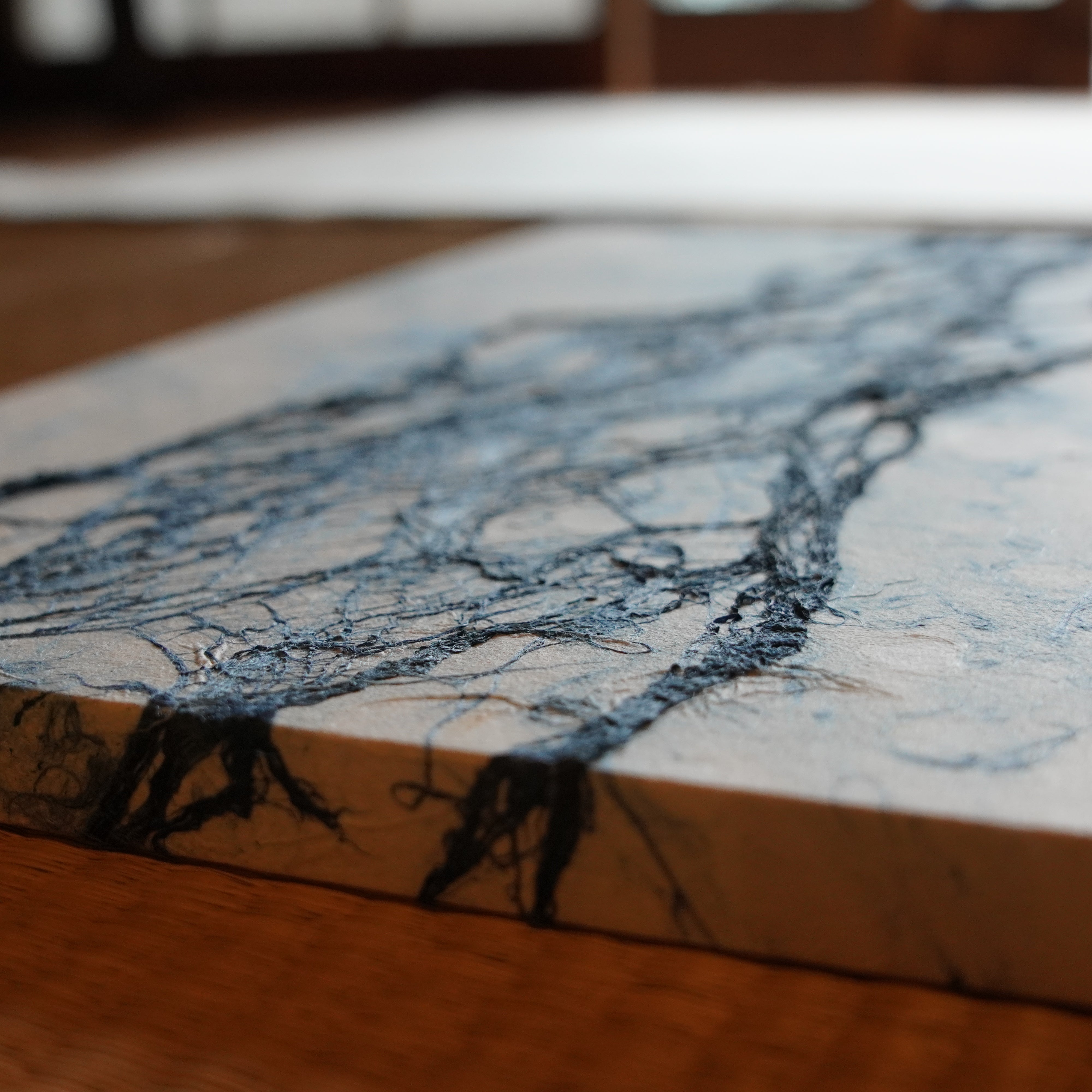
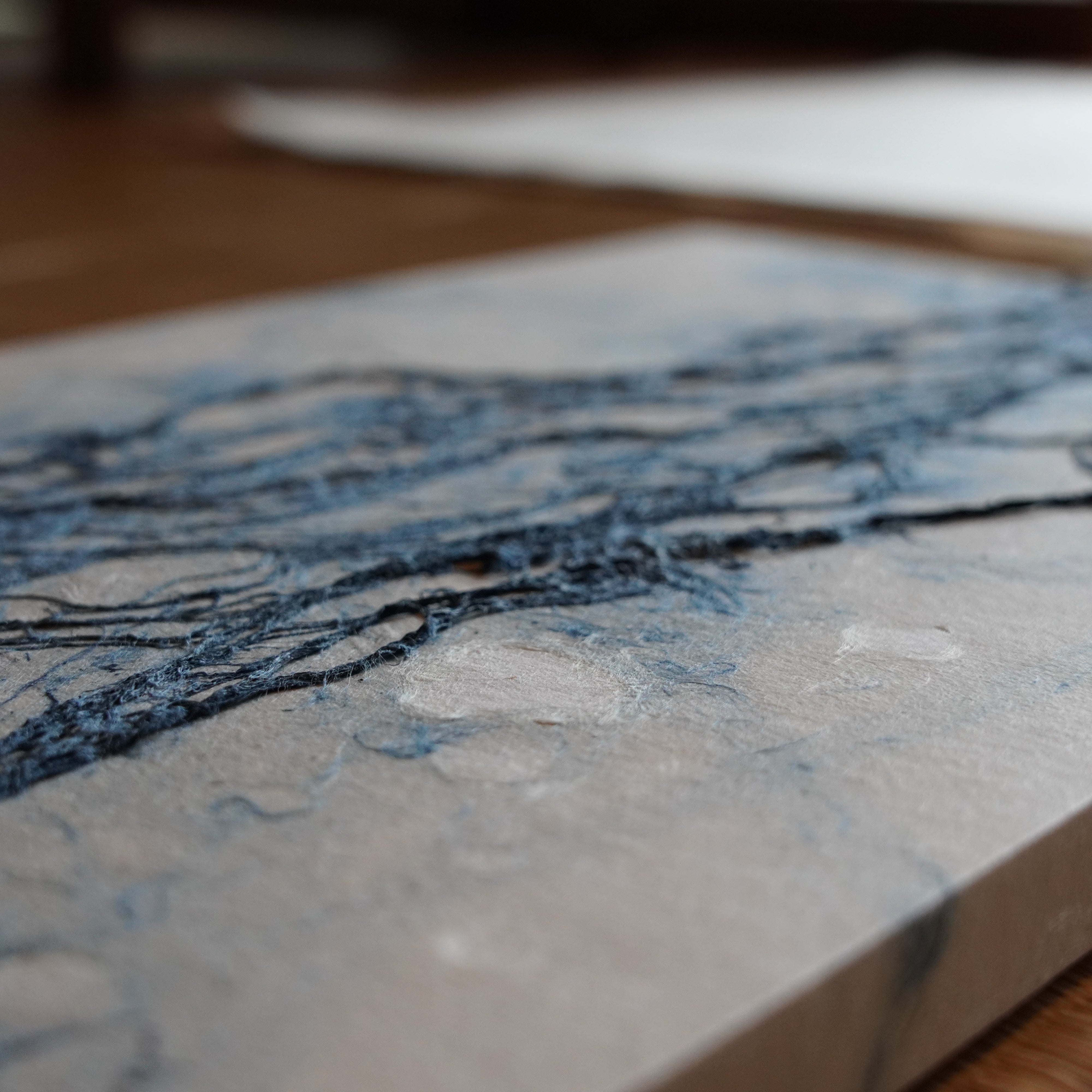
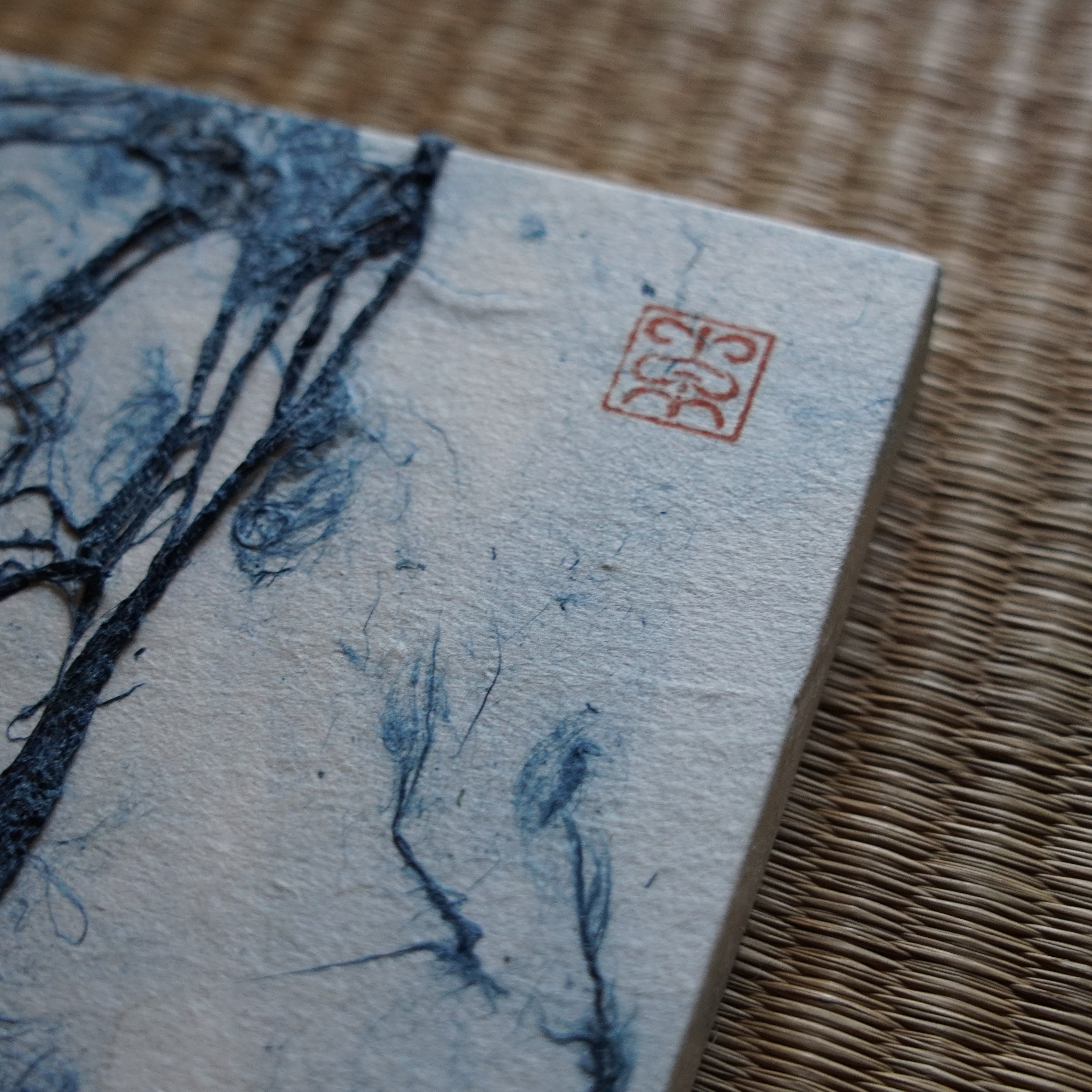
MINO WASHI / MINO JAPANESE PAPER
About 1,300 years ago / 700s / Nara Period (710–794)
Mino washi has an exceptionally long history: documents in the eighth-century Shosoin already record paper from Mino. Clean water from the Nagara River system and kozo mulberry supported the development of paper that is remarkably thin, even and strong, used for writing, shoji screens and lanterns.
In Japan, Mino washi is especially familiar through the soft light of paper screens. Traditional Hon-minoshi techniques are protected as part of UNESCO-recognized handmade washi culture, while contemporary applications include lighting, architecture, art and hybrid materials.
During sheet formation, the bamboo screen is moved repeatedly both lengthwise and sideways, intertwining long kozo fibers in multiple directions. The result explains why an extremely thin sheet can still be strong: structural performance comes from a complex network hidden inside the light paper.