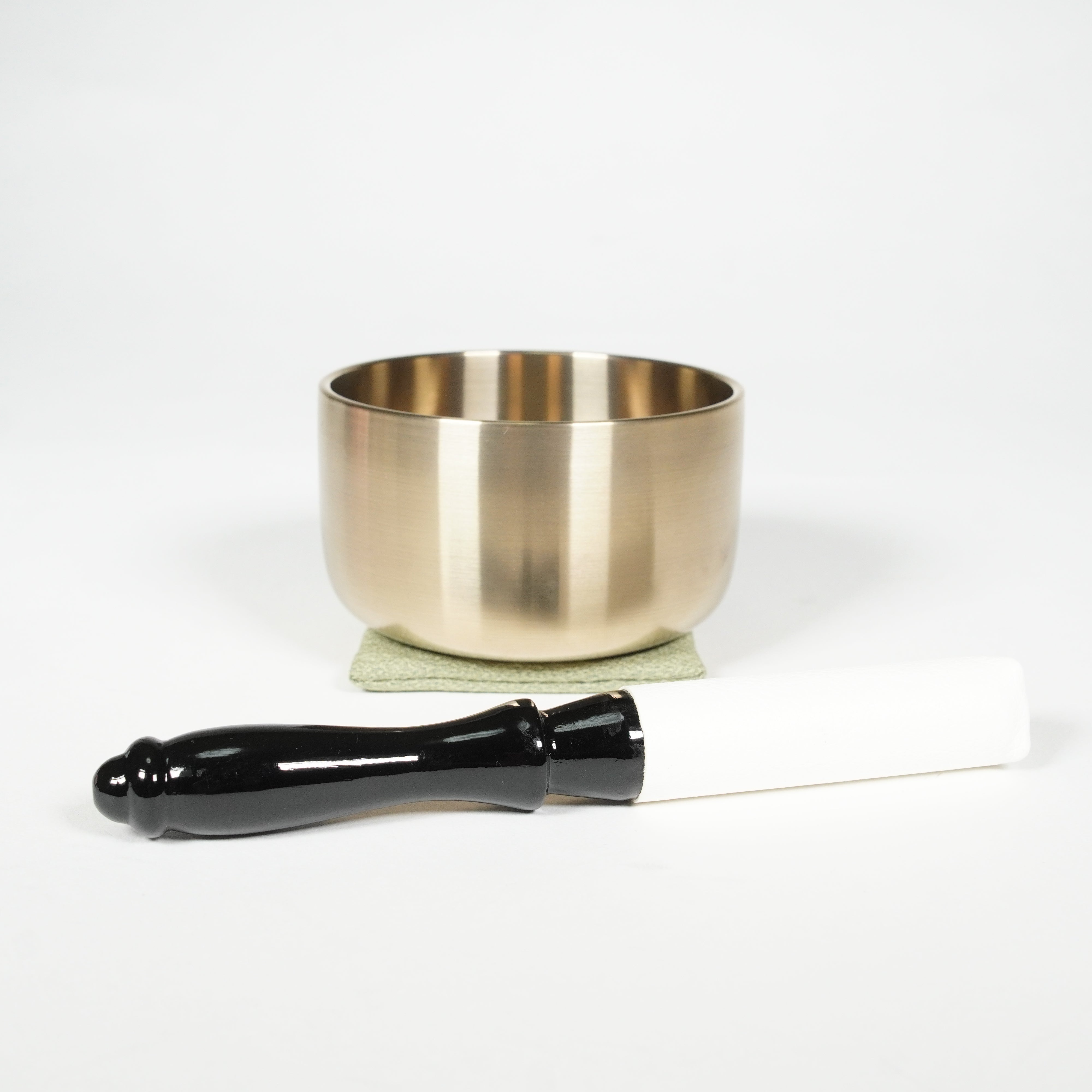
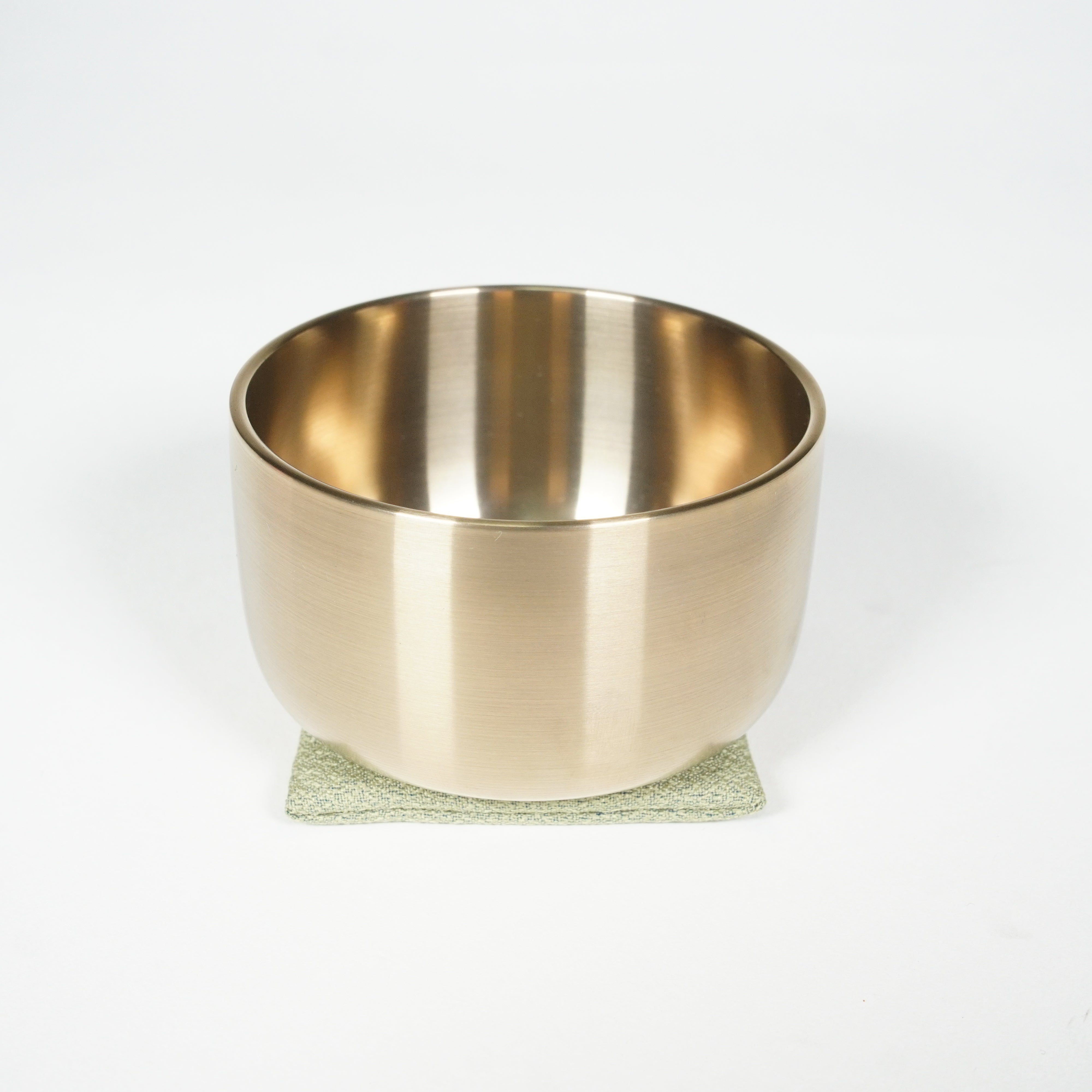
ORIN / JAPANESE SINGING BOWL
About 1,400 years ago / 600s / Asuka Period (592–710)
Japanese singing bowls trace their roots to metal ritual instruments that arrived in Japan with Buddhism. They became established in temples as signals for chanting and worship, later spreading to household Buddhist altars. Through refinements in casting, hammering and alloy composition, Japanese makers developed bowls prized for long, clear resonance.
For many Japanese people, the sound of a singing bowl marks more than a religious ritual: it creates a moment to remember the deceased and settle the mind. Today the bowls remain important Buddhist implements, while also being rediscovered for meditation, relaxation and contemporary interiors.
A fascinating point is that two bowls of almost identical appearance can sound completely different. Alloy composition, wall thickness, finishing, temperature and humidity can all affect resonance, and craftspeople ultimately tune the sound by ear. In that sense, this is not only a craft of shaping metal, but a craft of shaping sound.