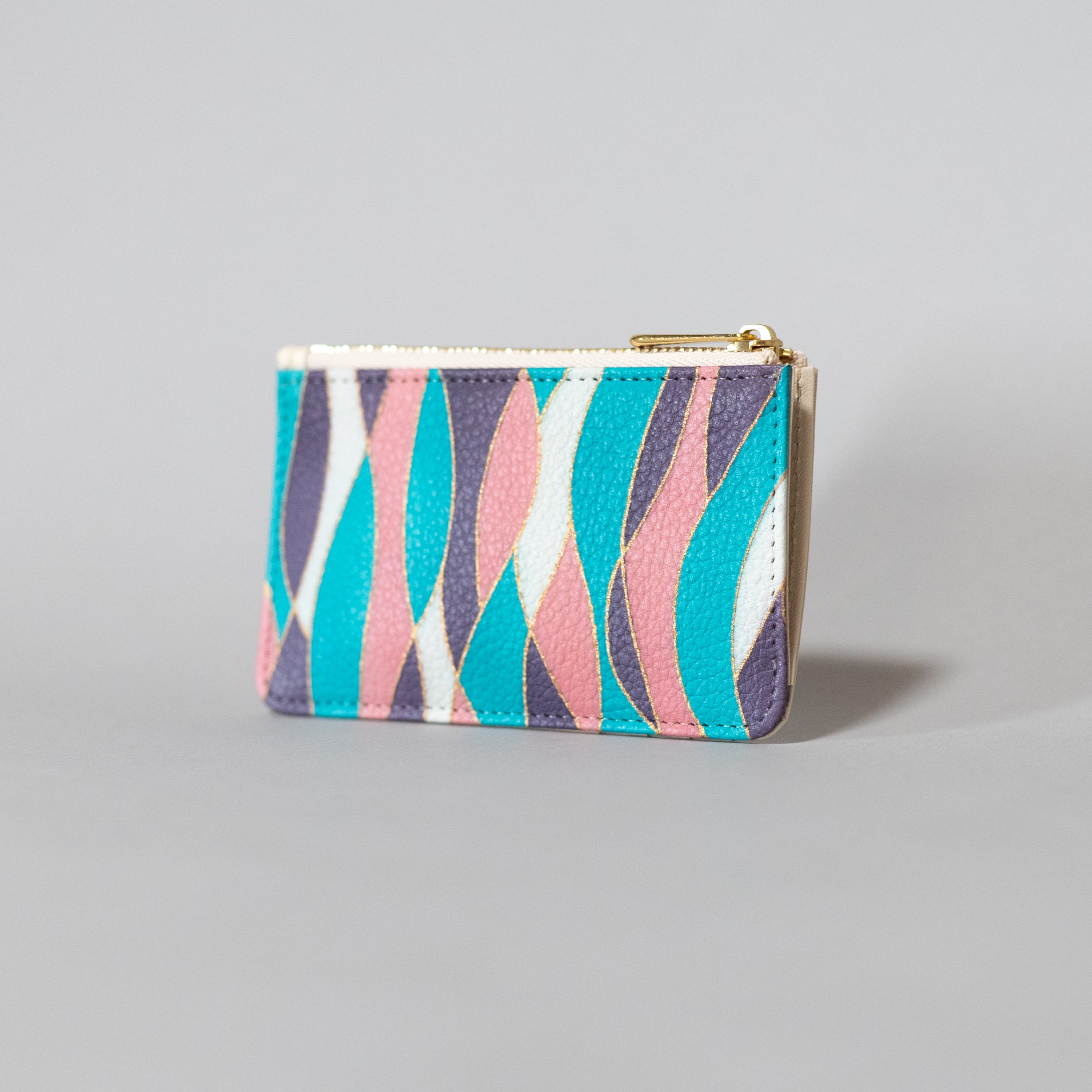
Kyo-Yuzen Leather / Fragment Case / Aster (Shion)
DESCRIPTION
DETAILS
SIZE
MATERIAL
ARTISAN
KOGEI
Caution
Choose options


Kyo-Yuzen Leather / Fragment Case / Aster (Shion)
Sale price€125,95
Country
Language
Cart
Your cart is empty


The perfect fragment case for the cashless era.
A card holder with a zipper pocket, convenient to have one in the cashless era.
It is compact and does not get stuck in a small bag.
The zipper pocket can be used for coins, keys, or a variety of other purposes.
It can serve many roles in a single bag. The zipper is gusseted so there is no stress when taking it in and out.
Eliminating waste and being smart with the money you carry around will lead to better luck in money matters.
Leather model
This is an all-leather model with leather, not silk, as the outer fabric.
The leather is not printed, but dyed one by one by utilizing the technique of yuzen.
We developed leather suitable for coloring with a tanner in Himeji, and use our own dyes,
This allows us to freely dye different patterns on the leather.
SIZE
Width:12cm
Depth : 0.9cm
Height : 7.5cm
Weight:36g
MATERIAL
Cowhide
IKEUCHI YUZEN
"Creating New Beauty with Traditional Techniques"
In an industry where division of labor is the norm, our studio is one of the few that handles everything from design to production. With the philosophy of "conveying the beautiful spirit of Japan through Yuzen dyeing," we cherish classical traditions while actively engaging in new initiatives that connect these traditions to the future.
ARTISAN STORY
Masahiro Ikeuchi
Masahiro Ikeuchi was born in Kyoto City in 1981. While attending university, he was inspired by the works of his father, a Yuzen artist, and decided to join the family business of hand-painted Yuzen dyeing. He studied design under the katazome artist Kazuko Shibuya while in university. Later, he apprenticed under his father to learn the techniques of hand-painted Yuzen dyeing. Alongside creating kimonos as part of the family business, he also challenges himself by combining traditional techniques with modern sensibilities to create new values, such as scarves and fashion accessories that bridge the past and future.
KYO YUZEN / KYOTO SILK DYEING
About 340 years ago / 1680s / Edo Period (1603–1868)
Kyo Yuzen took a decisive form in Kyoto’s Genroku era, when designs by the celebrated fan painter Miyazaki Yuzensai were applied to kimono. Fine paste-resist lines allowed many colors to be painted next to one another like a picture, establishing hand-painted Yuzen. In the Meiji period, stencil-based Yuzen greatly expanded production.
In Japan, Kyo Yuzen represents formal celebratory kimono worn for coming-of-age ceremonies, weddings and other important occasions. Brilliant dyeing may be combined with gold and embroidery, while the same techniques now appear on bags, scarves and interiors.
A single kimono can pass through more than twenty stages—design, underdrawing, resist application, coloring, steaming, washing, gold decoration and more. Different specialists often handle each stage, making Kyo Yuzen less the product of one maker than a collaborative artwork created by Kyoto’s craft network.
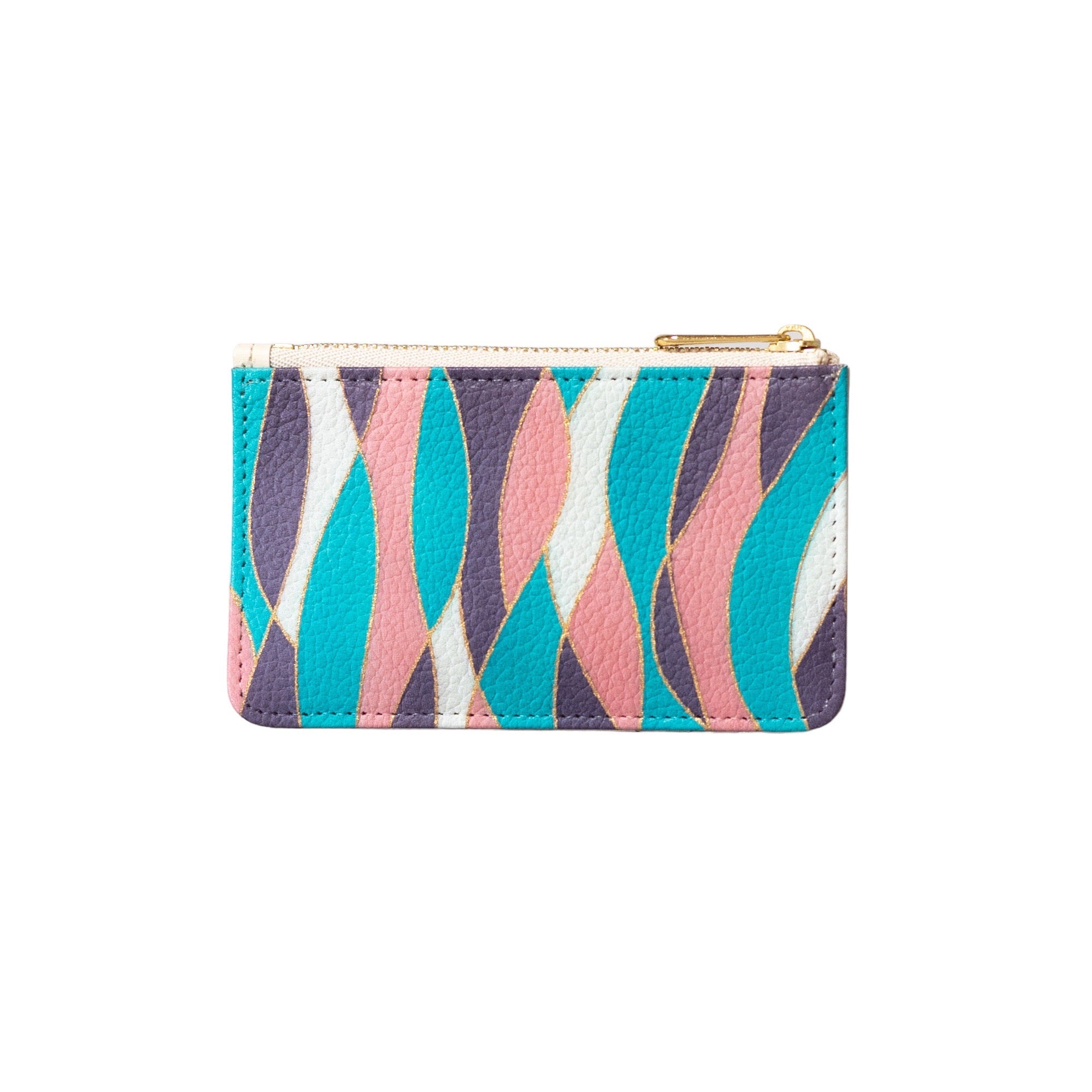
Individual Differences
As each piece is individually handcrafted, slight variations in color, pattern, shape, and texture may occur. These subtle differences are a natural characteristic of handcrafted works, making each piece truly unique. We hope you will enjoy these individual variations as part of the beauty and character of Japanese craftsmanship.
Production Time
If an item is not currently in stock, it may be made to order by the artisan. As each piece is carefully handcrafted, production may take several months depending on the item and the artisan's schedule. We appreciate your patience and understanding.

Choose options