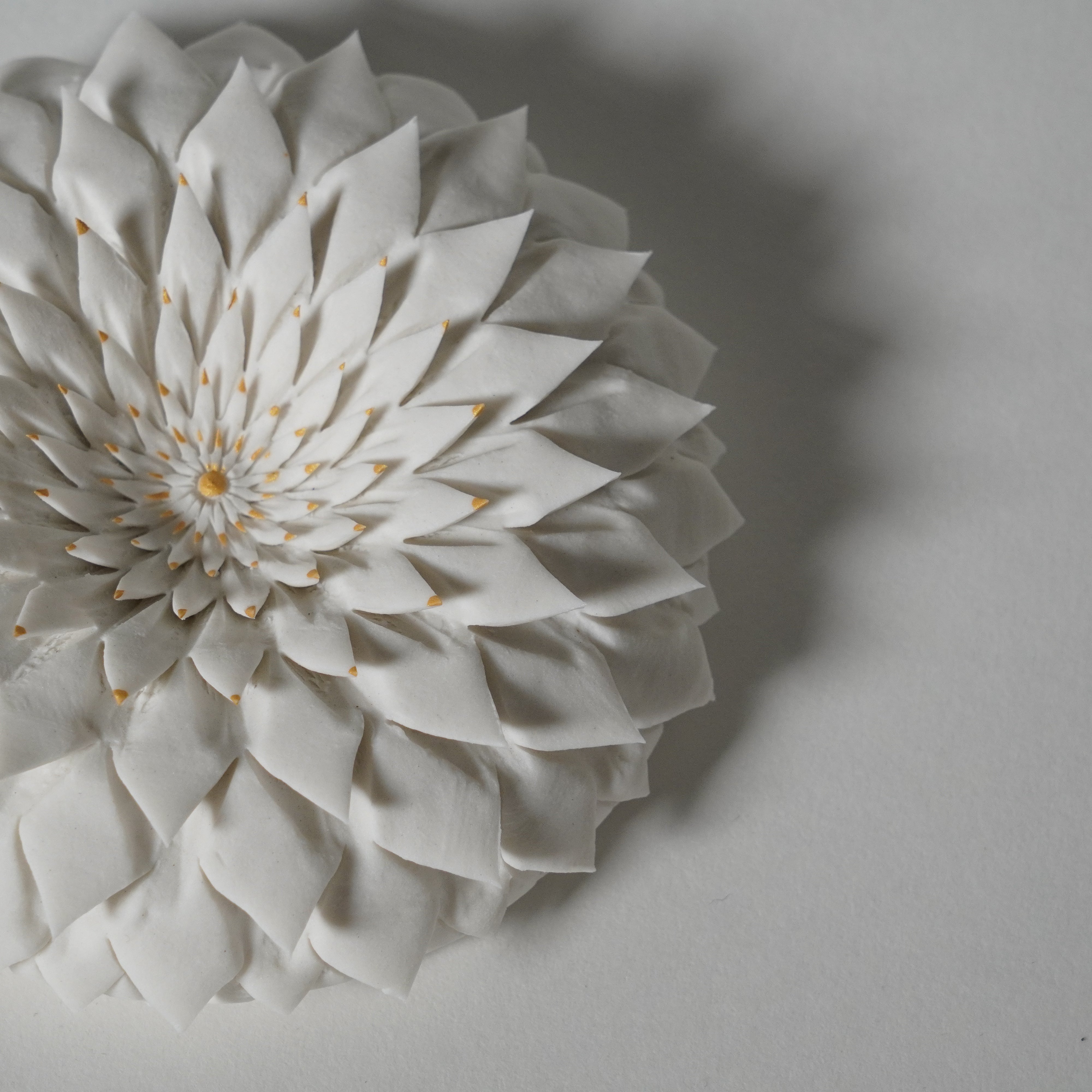
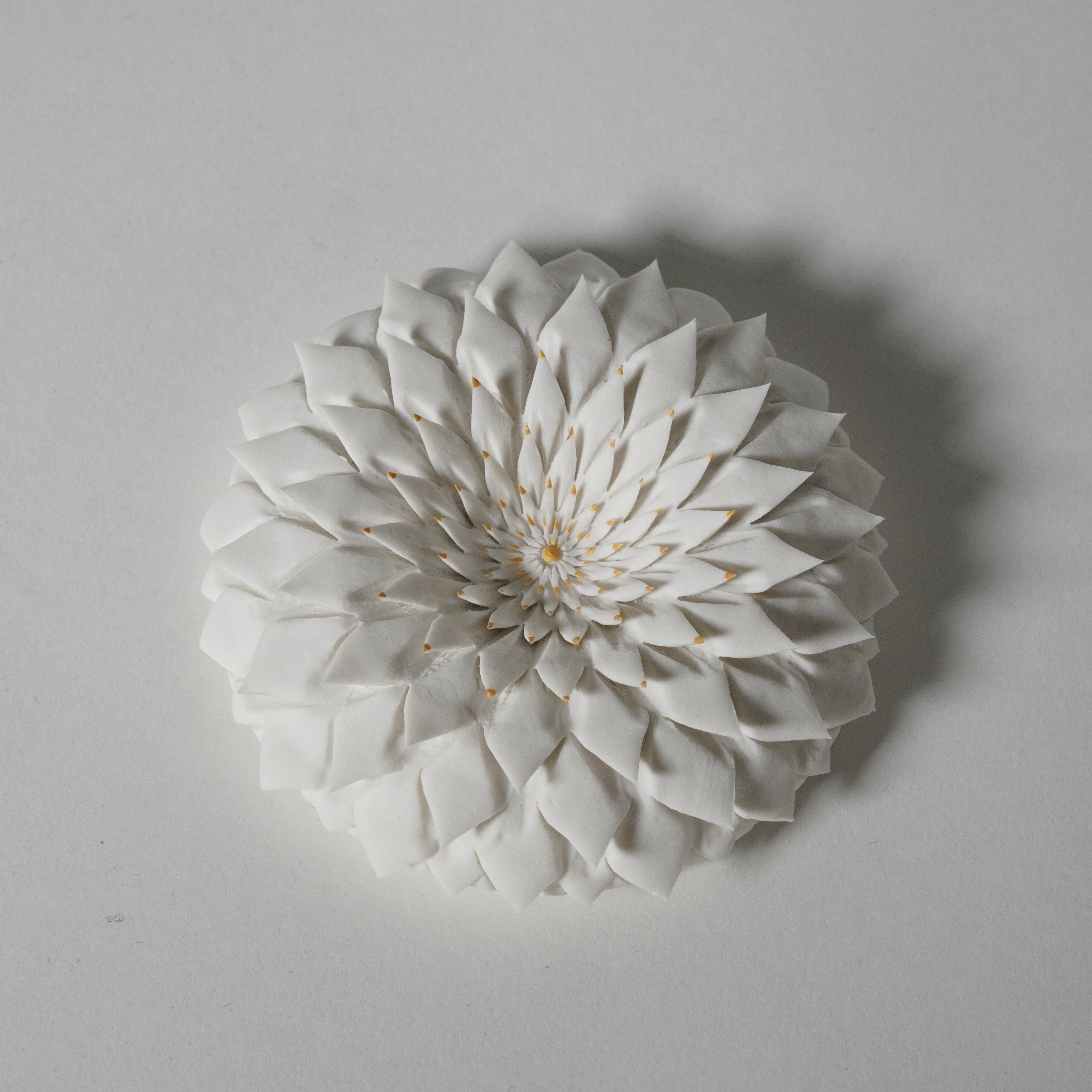
Paperweight / Kousungama / Chrysanthemum
DESCRIPTION
DETAILS
SIZE
MATERIAL
ARTISAN
KOGEI
Caution
Choose options


Paperweight / Kousungama / Chrysanthemum
Sale price€141,95
Country
Language
Cart
Your cart is empty


This paperweight was created using a unique technique of cutting the pottery with scissors before firing.
Inspired by traditional Japanese confectionery techniques, the beauty of chrysanthemums is reflected in the chrysanthemum petals created with scissors.
SIZE
Width:9cm
Depth:9cm
Height:5cm
Weight:270g
MATERIAL
Ceramics
KOSONGAMA
Pursuing, challenging, and refining the art of ceramics.
Inspired by the traditional Japanese sweet-making technique Hasamigiku, I developed a unique method of cutting into unfired clay with scissors, which I call Tsuchibasami—“Scissoring Clay.” I apply this delicate and intricate pattern mainly to flower vases and illuminators. Many of my works reflect the beauty of chrysanthemums, but I also explore other motifs such as feathers and fish scales.
ARTISAN STORY
Yuko Hayashi / Koson Kiln
“Koson Kiln” has a history of over 100years on the slopes of Chawan-Zaka next to the famous Kiyomizu temple in Kyoto. We have mainly been producing vessels which are made of white and celadon porcelain.
I entered the ceramic world when I was 21 years old.
I have been helping my father with his work whilst also raising children
and I have been challenging, improving, and pursuing my own ceramic style as a craftsperson….
KYO WARE & KIYOMIZU WARE
About 1,200 years ago / 800s / Heian Period (794–1185)
Kyoto ceramics reach back to kilns operating before and during the Heian period, then expanded with tea culture in the Muromachi and Momoyama eras. In the seventeenth century, Nonomura Ninsei perfected brilliant overglaze decoration, followed by innovators such as Ogata Kenzan, Okuda Eisen and Aoki Mokubei, whose diverse approaches shaped today’s Kyo and Kiyomizu ware.
In Japan, these ceramics are famous precisely because there is no single fixed style. Tea bowls, kaiseki dishes and everyday tableware may use overglaze painting, blue-and-white decoration, gold, sancai-inspired color and many other techniques. The craft sits at the heart of Kyoto’s culture of pairing vessels with cuisine and tea.
The surprising point is that Kyoto was never defined by a single major clay deposit. Potters drew on materials such as Amakusa porcelain stone, techniques arriving from other regions, and the tastes of artists and patrons gathered in the capital. Freedom from one local material helped make Kyoto ceramics unusually hybrid and stylistically diverse.
Individual Differences
As each piece is individually handcrafted, slight variations in color, pattern, shape, and texture may occur. These subtle differences are a natural characteristic of handcrafted works, making each piece truly unique. We hope you will enjoy these individual variations as part of the beauty and character of Japanese craftsmanship.
Production Time
If an item is not currently in stock, it may be made to order by the artisan. As each piece is carefully handcrafted, production may take several months depending on the item and the artisan's schedule. We appreciate your patience and understanding.

Choose options