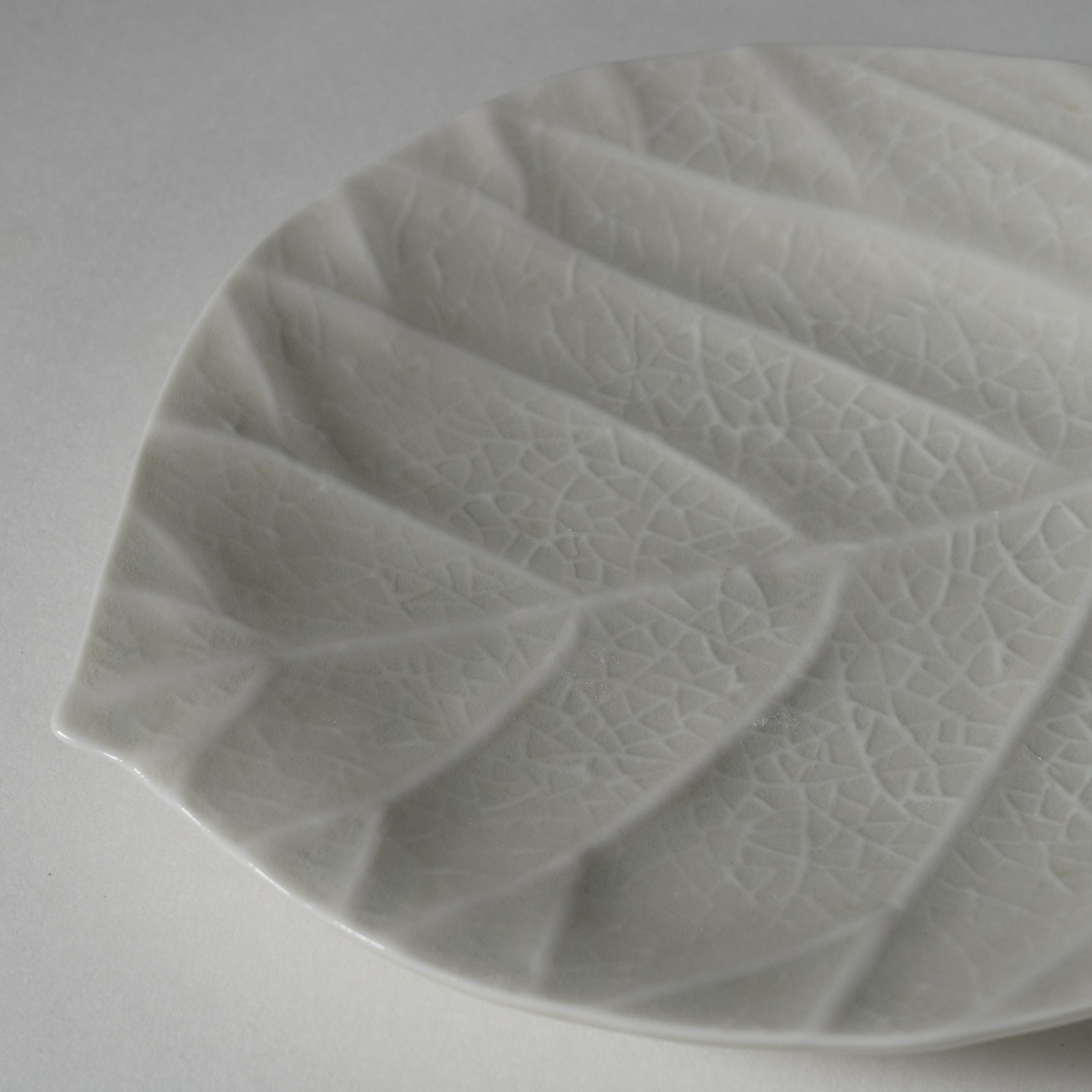
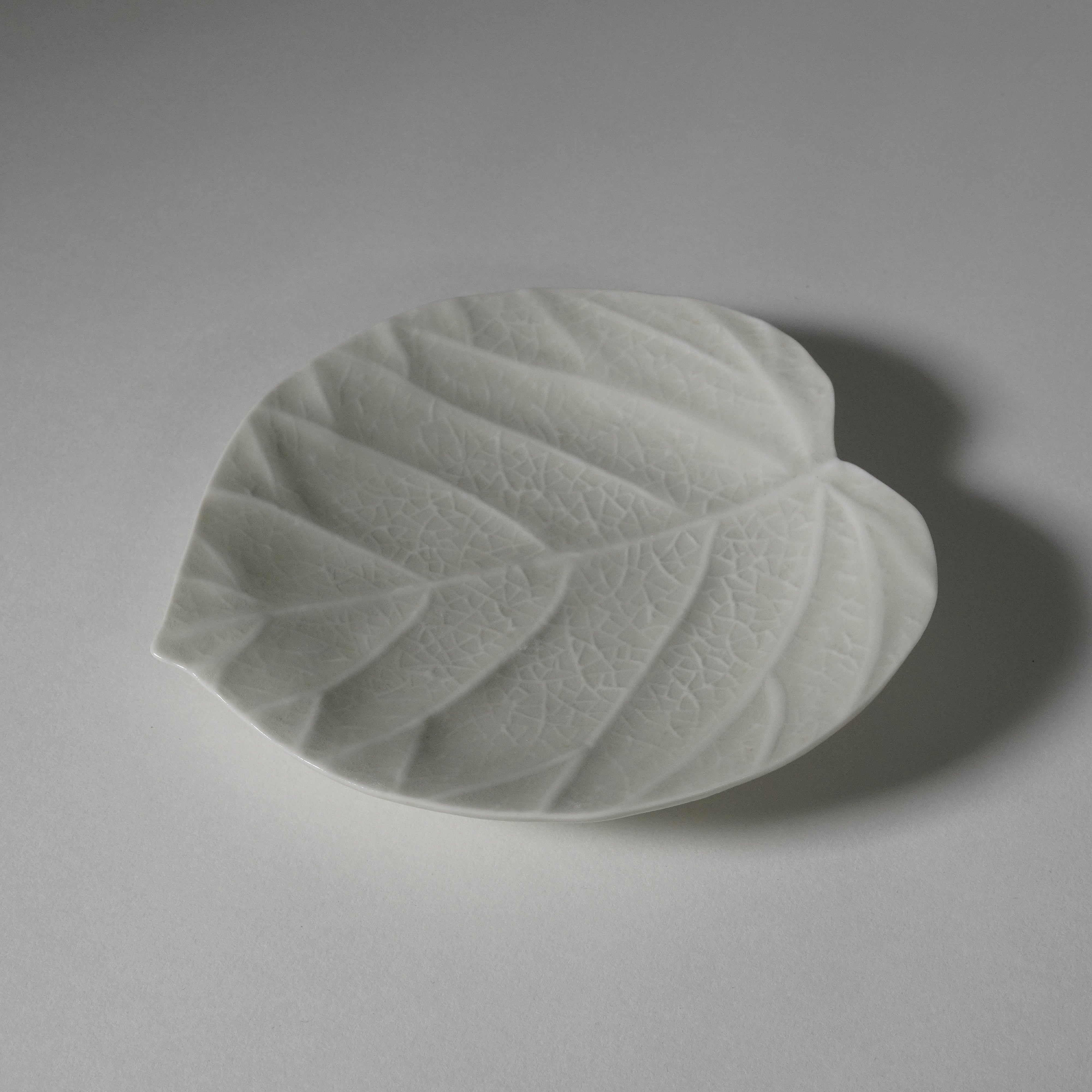
Plate / Ash Blue / Umbellata Leaf / 15cm
DESCRIPTION
DETAILS
SIZE
MATERIAL
ARTISAN
KOGEI
Caution
Choose options


Plate / Ash Blue / Umbellata Leaf / 15cm
Sale price€53,95
Country
Language
Cart
Your cart is empty


This plate is modeled after the leaves of the Umbellata plant.
The botanical design, inspired by plants and nature, blends with the tradition of Kyoto ware to combine beauty and practicality.
The white glaze is made from natural ash produced when wood is burned. Rather than using the scientific glazes commonly used in mass-produced items, we deliberately use unstable, naturally derived glazes to create unique colors and textures.
SIZE
Width:15cm
Depth:14cm
Height:1.5cm
Weight:165g
MATERIAL
Ceramics
JIUCASCA
Each piece quietly graces the table, bringing gentle comfort to the heart.
Jiucasca’s vessels are not mere tableware.
They are moments of healing that nestle into everyday life—
small works of art born from the palm of the hand,
infusing our tables with beauty and our hearts with warmth.
Like the first delicate rain after a long dry season,
each drop soaking into the earth and reviving life,
these vessels breathe vitality into the dining table and gently nourish the soul.
The name Jiucasca carries this very wish.
ARTISAN STORY
Asami Maeda / Jiucasca
Born in Tokyo in 1988.
After studying a wide range of fields including art and philosophy, she was captivated by the world of ceramics and began creating her own works.
Her pieces often feature nature-inspired motifs, adorned with delicate patterns reminiscent of lace, crafted through techniques such as icchin slip trailing and stamping.
Utilizing the inherent qualities of porcelain—thin yet remarkably durable—her vessels are both refined and delicate, while being perfectly suited for everyday use.
KYO WARE & KIYOMIZU WARE
About 1,200 years ago / 800s / Heian Period (794–1185)
Kyoto ceramics reach back to kilns operating before and during the Heian period, then expanded with tea culture in the Muromachi and Momoyama eras. In the seventeenth century, Nonomura Ninsei perfected brilliant overglaze decoration, followed by innovators such as Ogata Kenzan, Okuda Eisen and Aoki Mokubei, whose diverse approaches shaped today’s Kyo and Kiyomizu ware.
In Japan, these ceramics are famous precisely because there is no single fixed style. Tea bowls, kaiseki dishes and everyday tableware may use overglaze painting, blue-and-white decoration, gold, sancai-inspired color and many other techniques. The craft sits at the heart of Kyoto’s culture of pairing vessels with cuisine and tea.
The surprising point is that Kyoto was never defined by a single major clay deposit. Potters drew on materials such as Amakusa porcelain stone, techniques arriving from other regions, and the tastes of artists and patrons gathered in the capital. Freedom from one local material helped make Kyoto ceramics unusually hybrid and stylistically diverse.
Individual Differences
As each piece is individually handcrafted, slight variations in color, pattern, shape, and texture may occur. These subtle differences are a natural characteristic of handcrafted works, making each piece truly unique. We hope you will enjoy these individual variations as part of the beauty and character of Japanese craftsmanship.
Production Time
If an item is not currently in stock, it may be made to order by the artisan. As each piece is carefully handcrafted, production may take several months depending on the item and the artisan's schedule. We appreciate your patience and understanding.

Choose options